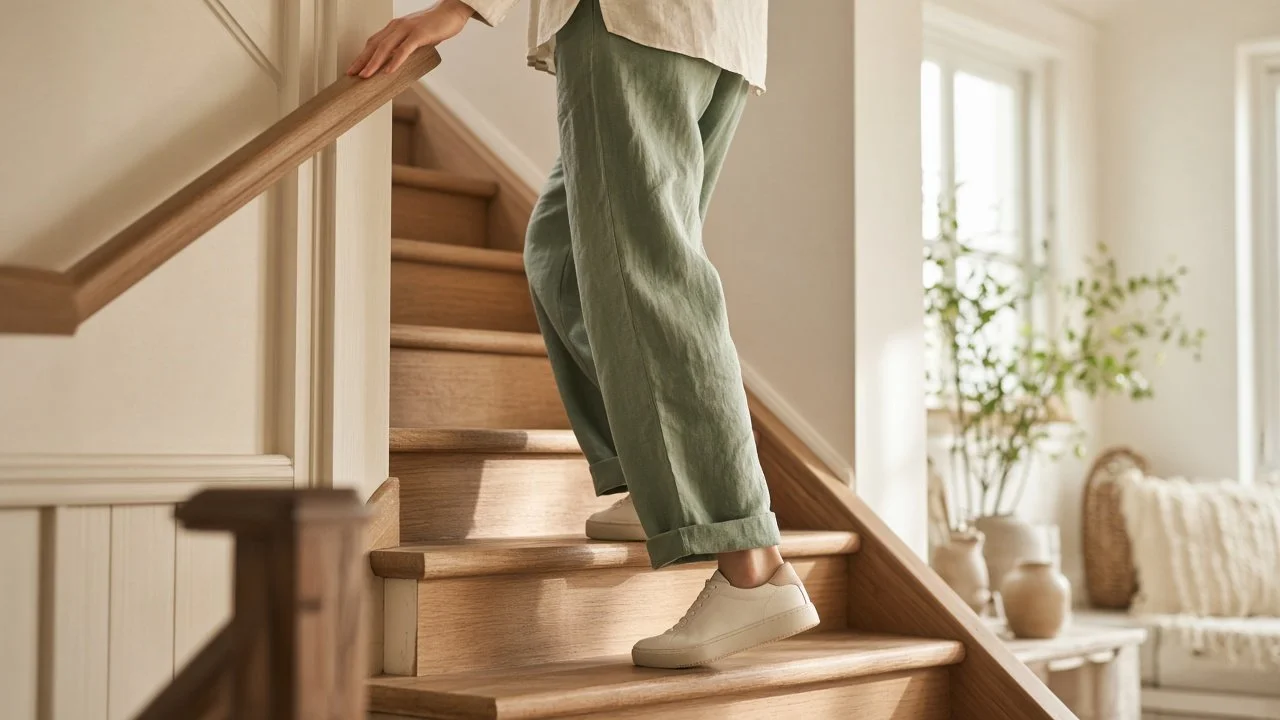
Walking around the house feels fine. Then you get to the stairs, and your knee lets you know about it, especially on the way down. You grab the railing, take the steps one at a time, and wonder when stairs became the hardest part of your day.
You're not imagining it. In a study that measured knee forces directly with sensor-equipped knee implants, going down stairs put more load on the knee than any other daily activity tested: about 3.5 times body weight (1). We hear about stairs all the time in our Mauldin office, from gardeners, grandparents carrying laundry baskets, and folks who want to keep hiking the Upstate trails.
The good news is that your knees are wonderfully designed to adapt to the right kind of load. Here's what we teach in our office.
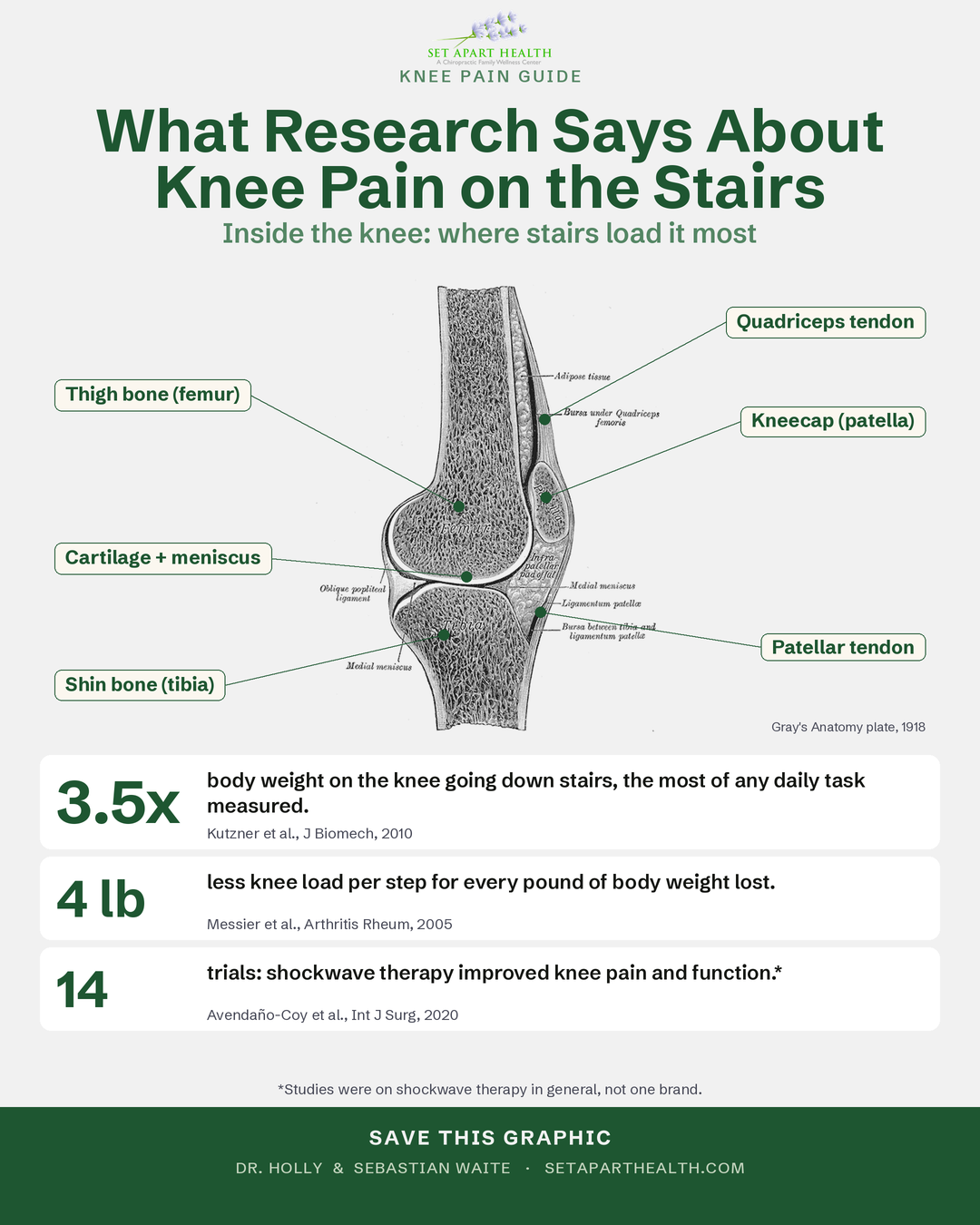
Body weight on the knee going down stairs, the most of any daily task measured.
Kutzner et al., 2010 (1)
Less load on the knee with every step, for each pound of body weight lost.
Messier et al., 2005 (2)
Trials in a review where shockwave therapy improved knee pain and function.
Avendaño-Coy et al., 2020 (5)
Individual results vary.
Why do my knees hurt going down stairs?
Your kneecap (patella) sits inside the big quadriceps tendon and glides in a groove at the end of your thigh bone (femur). Below the kneecap, the patellar tendon anchors to your shin bone (tibia). Smooth cartilage and two C-shaped cushions called menisci sit between the thigh bone and the shin bone.
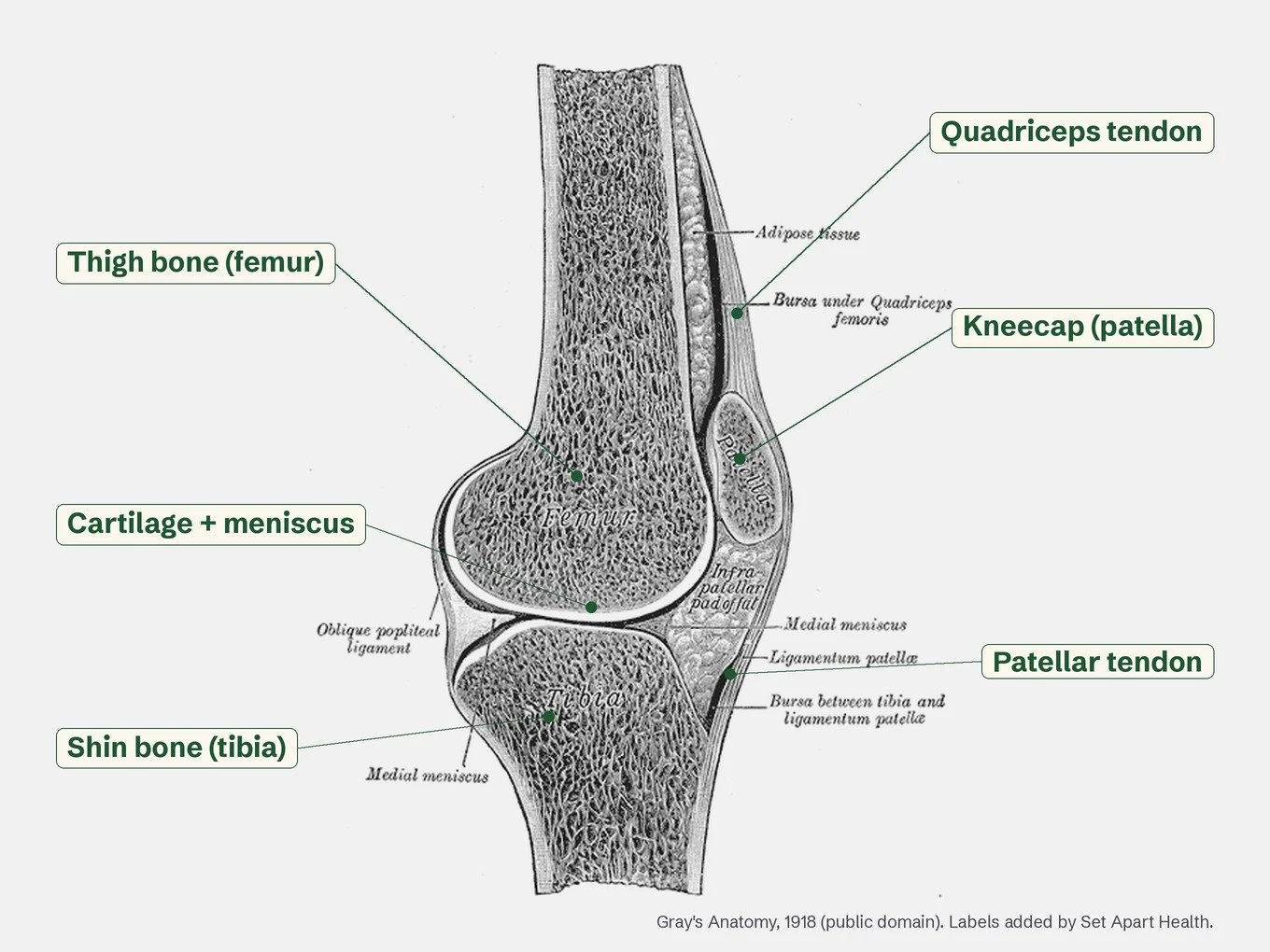
When you step down, your thigh muscles work like brakes. They lengthen under load to lower your whole body weight onto one bent knee, and the pressure on the joint climbs. Two of the most common reasons stairs start to hurt are irritation behind the kneecap (often called patellofemoral pain) and wear-and-tear changes inside the joint (knee osteoarthritis). Weak thighs or hips, extra body weight and a sudden jump in activity can all add to it.
Why is going down stairs harder than going up?
In the knee-implant study, the average peak force on the knee was about 346% of body weight going down stairs, about 316% going up, and about 261% walking on level ground (1). Going down asks the thigh muscles to control the drop, step after step. That's why strength, especially slow, controlled strength, is where most of the at-home work starts.
The stairs aren't asking your knees to be pain-free first. They're asking your thighs and hips to get stronger, a little at a time.
5 natural ways to ease knee pain on the stairs
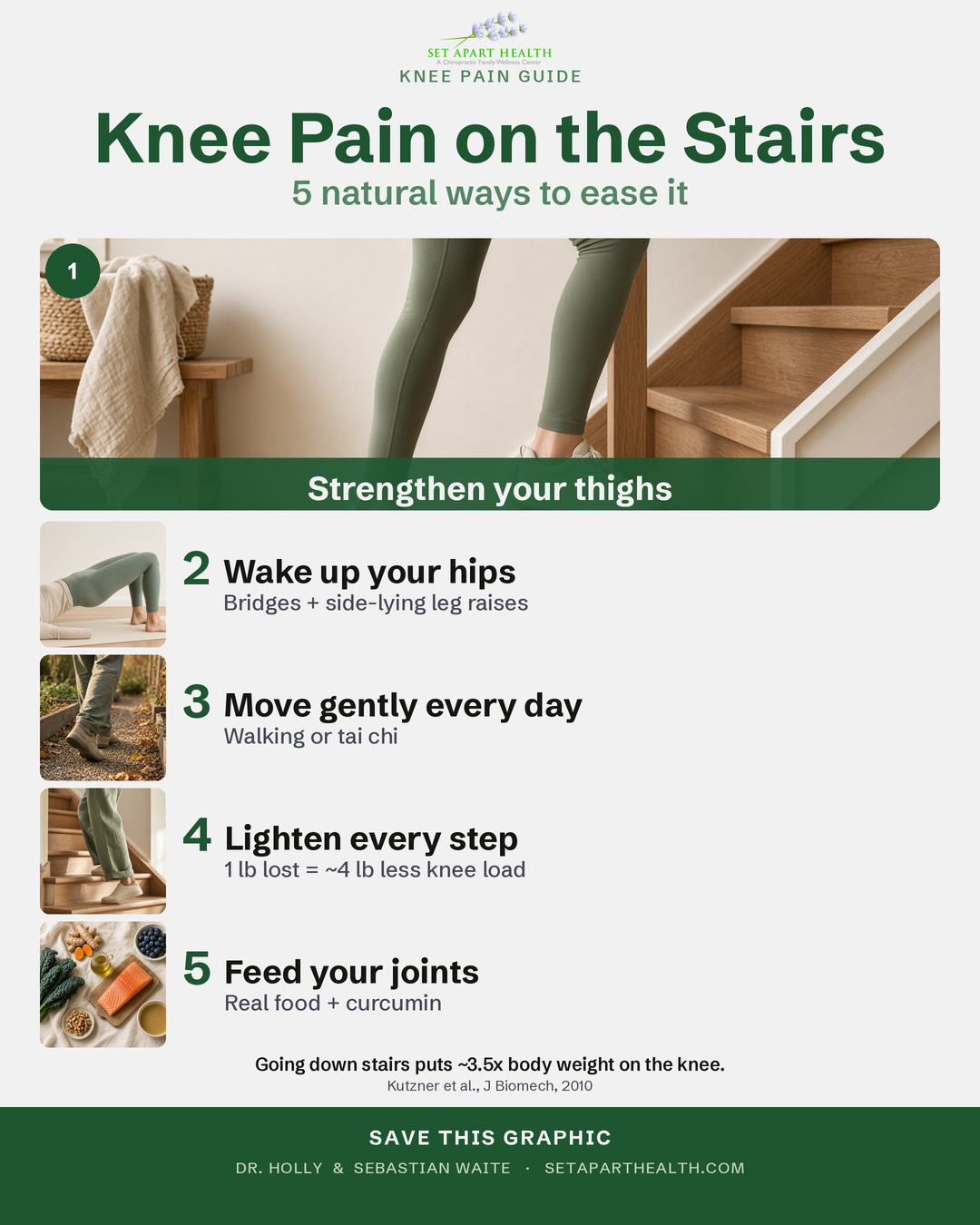
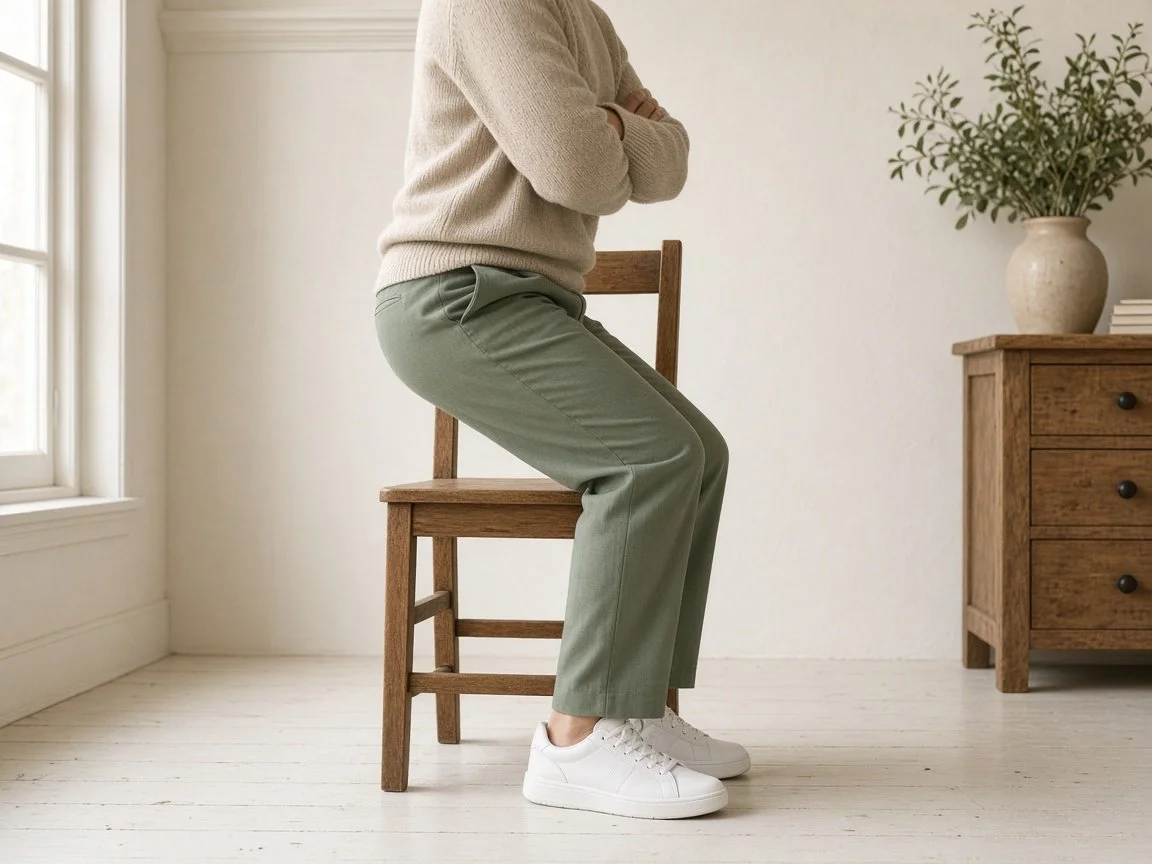
1. Strengthen your thighs with slow step-downs and sit-to-stands
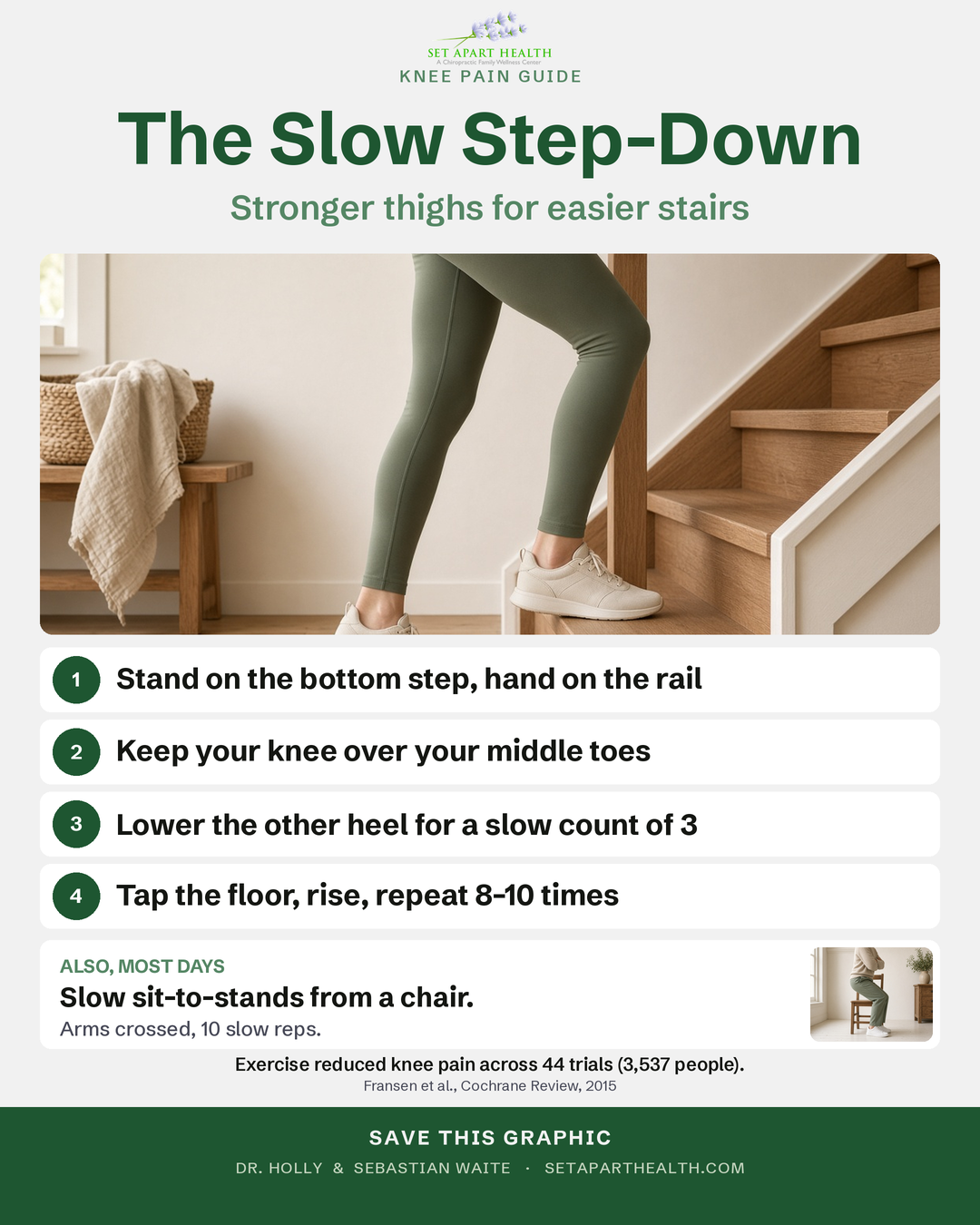
Exercise is one of the best-studied natural tools for sore knees. A Cochrane review pooled 44 trials with 3,537 people who had knee osteoarthritis and found that exercise reduced pain and improved physical function (3). We like two moves that train the exact job stairs ask of your thighs.
Try this today: Stand on the bottom step with a hand on the railing. Keep your knee over your middle toes and slowly lower the other heel toward the floor for a count of 3. Tap the floor, rise back up, and repeat 8–10 times. Stay in a range that feels manageable.
2. Wake up your hips
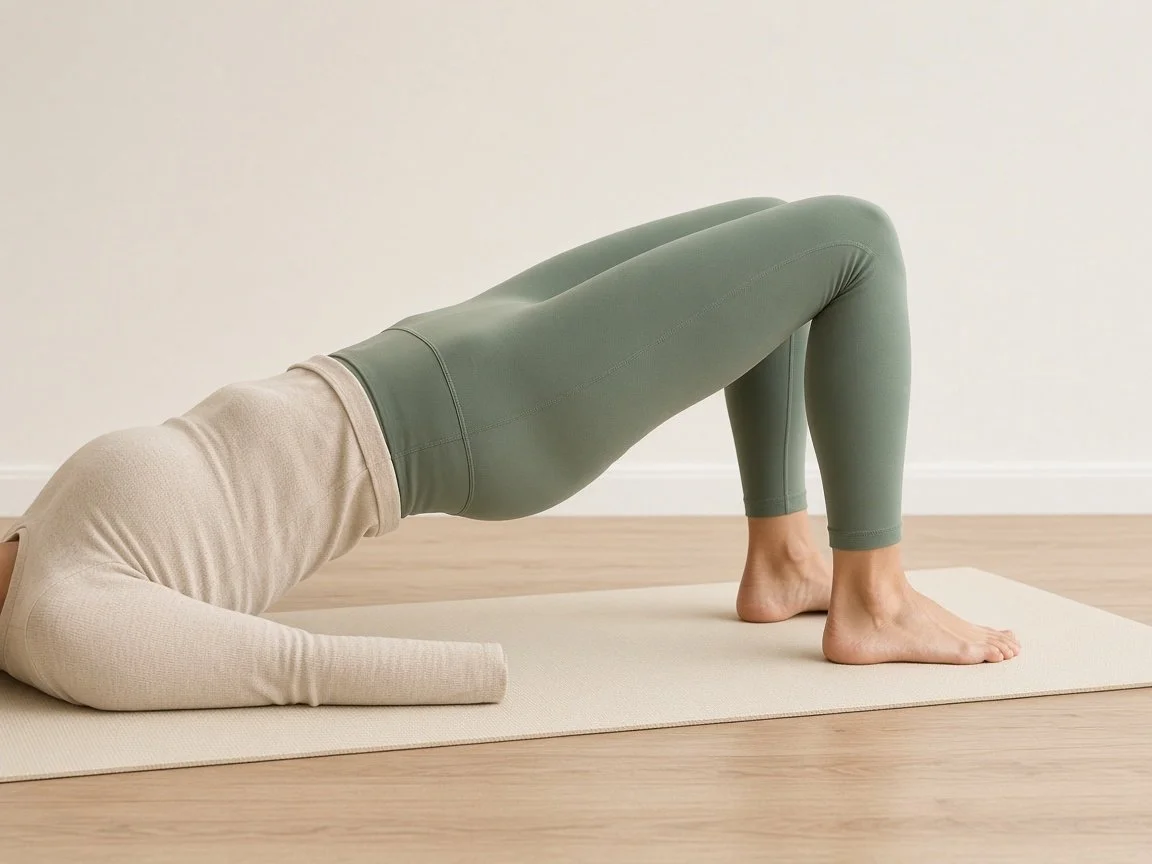
Your hips steer your knees. When the muscles on the side and back of the hip are weak, the knee tends to drift inward on each step. A review of 14 studies found strong evidence that combining hip strengthening with thigh strengthening reduced kneecap pain and improved function in the short term (4).
Try this today: Lie on your back with knees bent and do 10 slow glute bridges, squeezing your seat at the top. Then lie on your side and lift the top leg straight up 10 times on each side.
3. Move gently every day: walking or tai chi
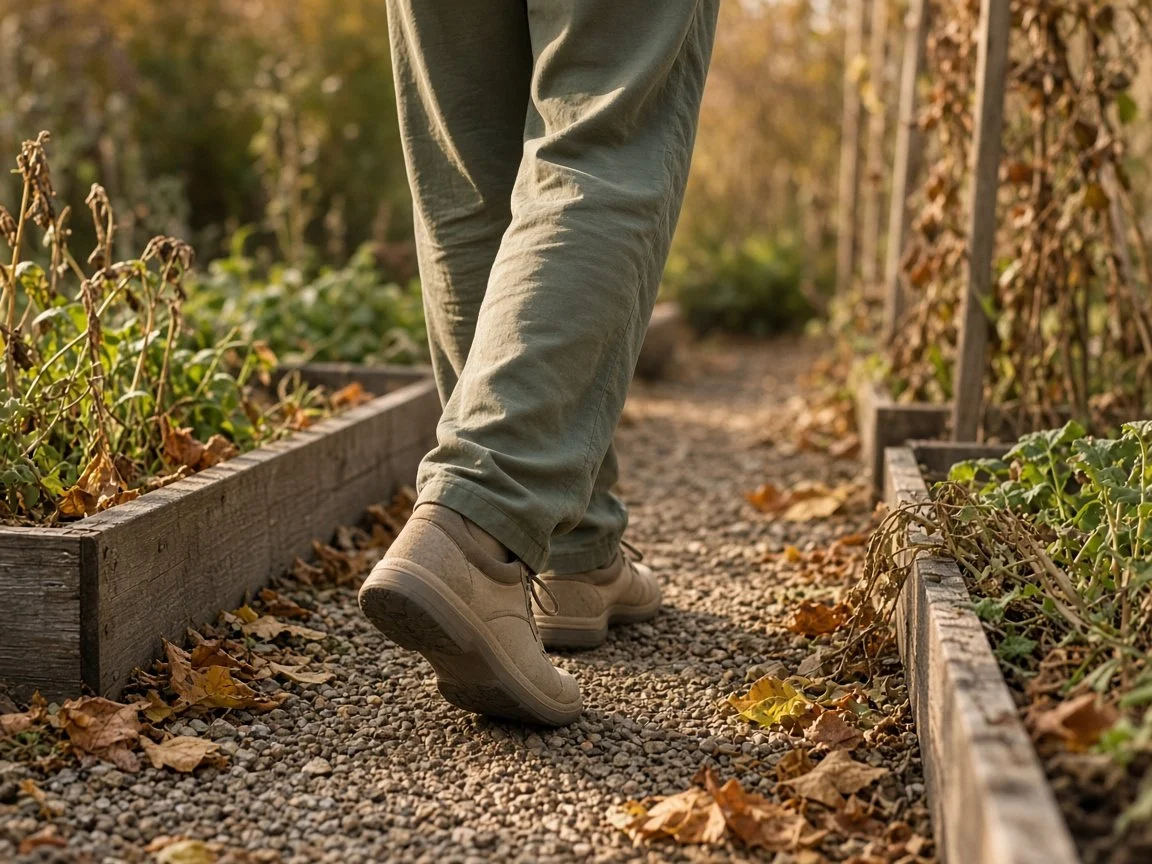
Joints love motion. In a randomized trial of 204 adults with knee osteoarthritis, 12 weeks of tai chi improved pain and function as much as a standard course of physical therapy, and the benefits held up to a year (6). A daily walk on a flat path does a lot of good too. Around here, that might be a loop around the neighborhood, the Swamp Rabbit Trail, or a slow lap of the garden.
4. Lighten the load on every step
In older adults with knee osteoarthritis, each pound of weight lost meant about 4 pounds less force on the knee per step (2). Over thousands of steps a day, that adds up. Real food, steady movement and good sleep all help here. On the stairs themselves, use the railing and carry heavy loads in a few smaller trips.
5. Feed your joints
Your cartilage, tendons and ligaments are living tissue that's always being rebuilt. Real food is the foundation; the details and the two supplements we use most are just below.
Natural joint support: food and supplements

- Turmeric and curcumin: A meta-analysis of randomized trials found that turmeric extract and curcumin reduced arthritis pain scores compared with placebo, at about 1,000 mg of curcumin a day (7).
- Collagen-rich foods: Real bone broth is naturally rich in gelatin, and it's a staple in our kitchen.
- A colorful plate: Fatty fish, berries, leafy greens, nuts and olive oil are the base of the way we eat at home.
 Instant Pot Beef Bone Broth
View recipe →
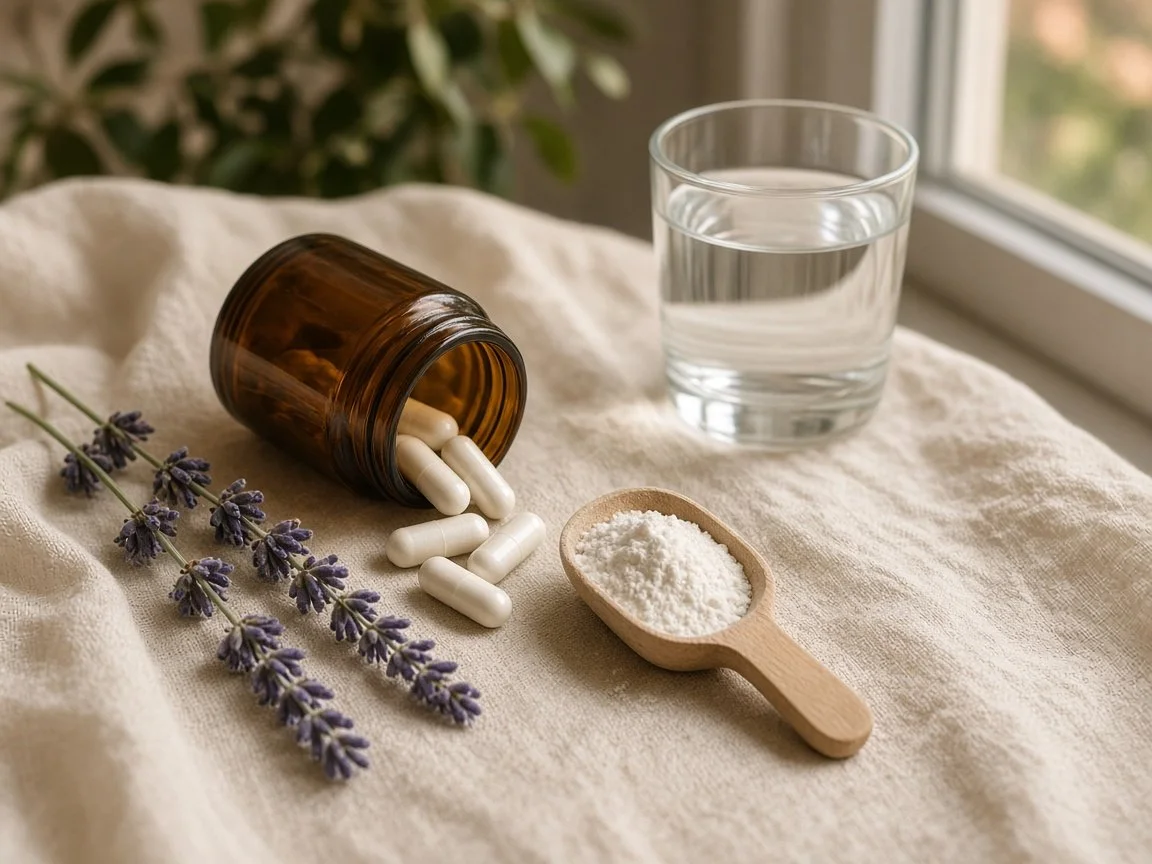
Integrative Therapeutics Theracurmin HP + Ortho Molecular CollaGEN
Theracurmin HP is a form of turmeric made to boost how much curcumin your body absorbs (8). CollaGEN is formulated to support cartilage, tendons, ligaments and fascia (9). These are the two we reach for when you want a simple daily routine from our dispensary.
Shop Our Fullscript DispensaryStemWave for knee pain in Mauldin, SC
Sometimes knee pain on the stairs hangs on even when you're doing all the right things at home. That's when people come see us for StemWave.
StemWave is a non-invasive handheld device that delivers focused pulses of energy to the area. Here's what a visit looks like in our office:
- We always start with a quick evaluation. StemWave isn't for everyone, so we screen first (pregnancy, pacemakers, blood thinners and a few other things).
- Gel goes on the skin and the applicator goes over the area. Most people describe it as a firm tapping. It can feel tender over sore spots.
- A session takes a few minutes, with no needles and no medication. If you're getting an adjustment the same day, StemWave comes last.
- Every body is different. Many plans run 8–12 sessions, spaced out on purpose, and we'll talk through what's realistic for you.
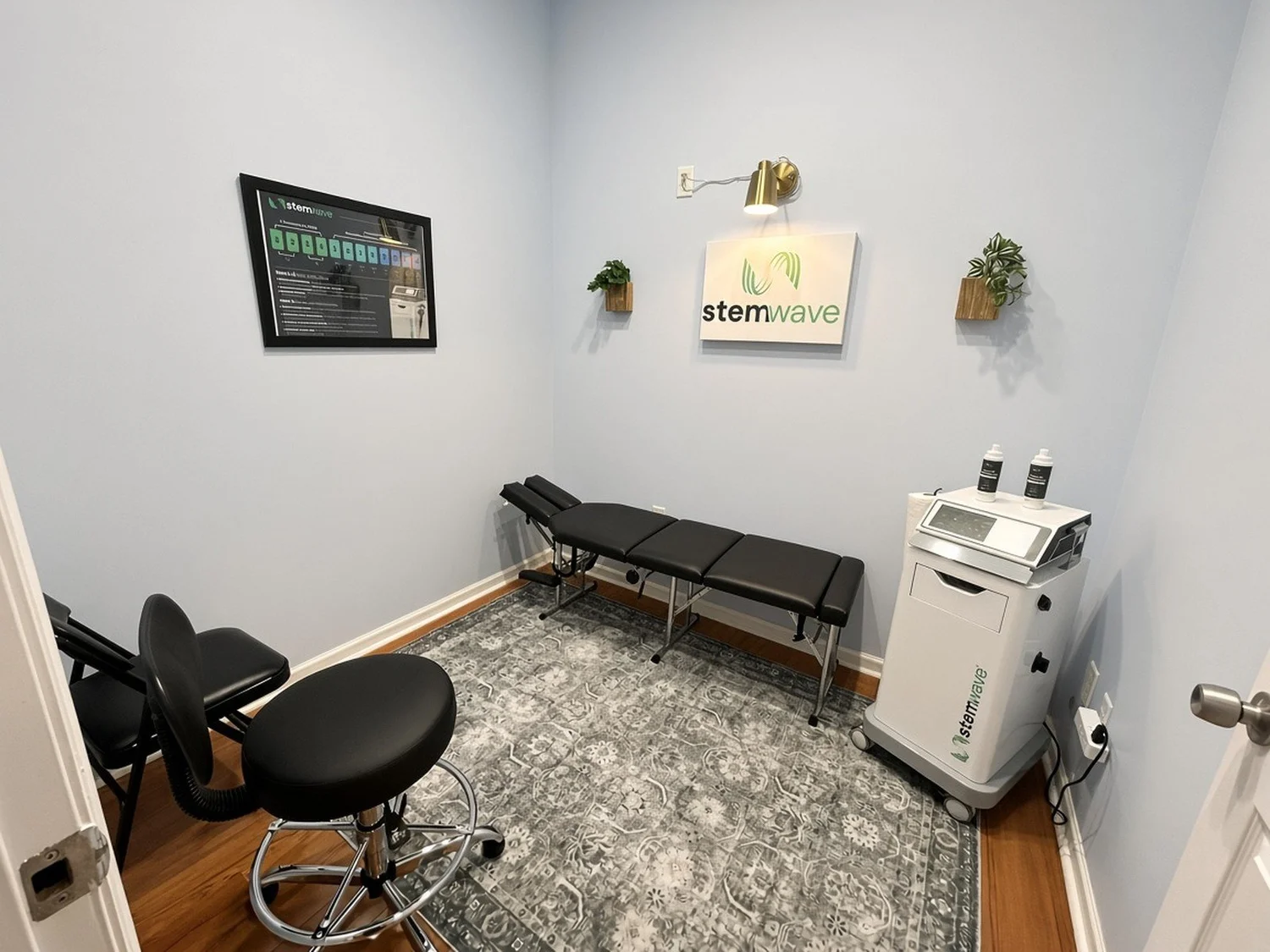
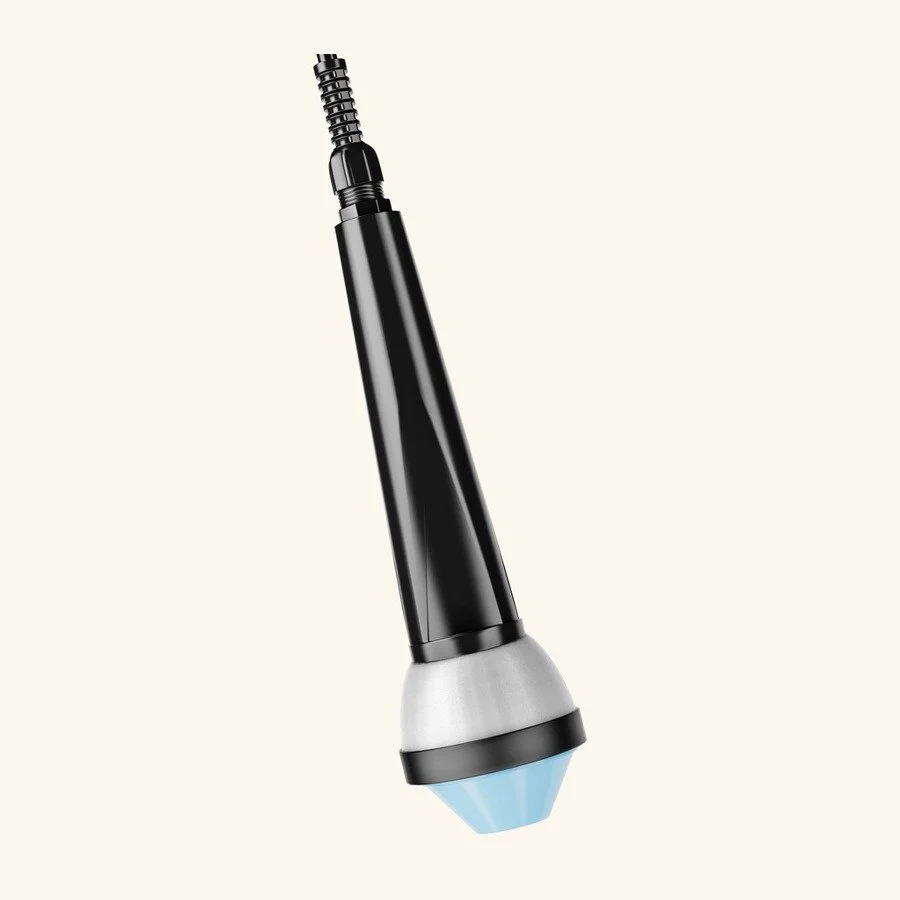
What research says about shockwave therapy for knee pain: StemWave is a focused shockwave device. A 2020 systematic review and meta-analysis of 14 randomized trials (782 people) found moderate-quality evidence that shockwave therapy reduced pain and improved function in people with knee osteoarthritis in the short term, with few minor side effects (5). These studies looked at shockwave therapy in general, not one specific brand.
Most people pair StemWave with the strength work above, and that combination is how we like to work. If the first steps out of bed are the hard ones, this is a good next read.
 Heel Pain with Your First Steps in the Morning
View article →
Individual results vary.
Ready to take the stairs without thinking twice?
Request your $49 StemWave intro visit right here on the website, and we'll walk you through what to expect. Or call the office at (864) 558-0711. We're at 785 E Butler Rd Ste D in Mauldin, just outside Greenville.
When to call us right away
Call the office at (864) 558-0711 the same day if:
- your knee pain started with a fall, a twist or a pop;
- your knee locks, catches or gives way;
- you can't put weight on your leg;
- your knee is red, hot or very swollen, or you have a fever.
For an emergency, call 911.
Knee pain on the stairs: questions people ask
Going down asks your thigh muscles to brake every step, and the force is a bit higher than going up (1). That's why slow, controlled strength work helps so many people.
We start with slow step-downs, sit-to-stands, glute bridges and side-lying leg raises, then add daily walking or tai chi. The details, with photos, are in the section above (3, 4).
On sore days, use the railing and take one step at a time. Keep building strength with the exercises above so the stairs get easier, rather than avoiding them for good.
A review of 14 randomized trials found shockwave therapy reduced pain and improved function in knee osteoarthritis in the short term (5). We always evaluate first to see if StemWave is a good fit. Individual results vary.
Our office is at 785 E Butler Rd Ste D in Mauldin, SC, just outside Greenville. Request your $49 StemWave intro on the website, or call (864) 558-0711.
The bottom line
- Going down stairs is the hardest everyday job your knees do, about 3.5 times body weight.
- Start with slow strength: step-downs, sit-to-stands, bridges and side-lying leg raises.
- Move gently every day, lighten the load per step, and feed your joints with real food.
- If it's hanging on, StemWave is one more tool we use in our Mauldin office, and the shockwave research is encouraging.
Want more like this? We send real-food recipes, simple wellness tips and stories from our family and garden.
Sources & research
Every number in this article maps to a published source. The shockwave papers studied the therapy in general, not one specific brand.
- Kutzner I, Heinlein B, Graichen F, et al. Loading of the knee joint during activities of daily living measured in vivo in five subjects. J Biomech. 2010;43(11):2164-73. https://pubmed.ncbi.nlm.nih.gov/20537336/
- Messier SP, Gutekunst DJ, Davis C, DeVita P. Weight loss reduces knee-joint loads in overweight and obese older adults with knee osteoarthritis. Arthritis Rheum. 2005;52(7):2026-32. https://pubmed.ncbi.nlm.nih.gov/15986358/
- Fransen M, McConnell S, Harmer AR, et al. Exercise for osteoarthritis of the knee. Cochrane Database Syst Rev. 2015;1:CD004376. https://pubmed.ncbi.nlm.nih.gov/25569281/
- Lack S, Barton C, Sohan O, Crossley K, Morrissey D. Proximal muscle rehabilitation is effective for patellofemoral pain: a systematic review with meta-analysis. Br J Sports Med. 2015;49(21):1365-76. https://pubmed.ncbi.nlm.nih.gov/26175019/
- Avendaño-Coy J, Comino-Suárez N, Grande-Muñoz J, et al. Extracorporeal shockwave therapy improves pain and function in subjects with knee osteoarthritis: a systematic review and meta-analysis of randomized clinical trials. Int J Surg. 2020;82:64-75. https://pubmed.ncbi.nlm.nih.gov/32798759/
- Wang C, Schmid CH, Iversen MD, et al. Comparative effectiveness of tai chi versus physical therapy for knee osteoarthritis: a randomized trial. Ann Intern Med. 2016;165(2):77-86. https://pubmed.ncbi.nlm.nih.gov/27183035/
- Daily JW, Yang M, Park S. Efficacy of turmeric extracts and curcumin for alleviating the symptoms of joint arthritis: a systematic review and meta-analysis of randomized clinical trials. J Med Food. 2016;19(8):717-29. https://pubmed.ncbi.nlm.nih.gov/27533649/
- Fullscript catalog: Theracurmin HP, Integrative Therapeutics. https://fullscript.com/catalog/products/theracurmin-hp
- Fullscript catalog: CollaGEN, Ortho Molecular Products. https://fullscript.com/catalog/products/collagen