You swing your legs out of bed, stand up, and there it is: a sharp, stabbing pain in the bottom of your heel. You hobble the first few steps, it eases a bit as you move around, and then it comes right back after you've been sitting for a while.
If that sounds familiar, you're far from alone. Plantar fasciitis, one of the most common reasons for this kind of heel pain, accounted for about 1 million doctor visits a year in the U.S. in one national study (1). We hear about it all the time in our office, especially from people who are on their feet all day.
The good news is that your feet are wonderfully designed and respond to the right kind of care. Here's what we teach patients in our office.
U.S. doctor visits a year for plantar fasciitis, in one national study.
Riddle & Schappert, 2004 (1)
Reported less pain at two years after a plantar-fascia stretch.
DiGiovanni et al., 2006 (3)
Trials (2,450 people) ranked shockwave among treatments most likely to help.
Babatunde et al., 2019 (5)
These shockwave studies looked at the therapy in general, not one specific brand. Individual results vary.
What's going on in your heel?
Your plantar fascia is a thick band of tissue that runs along the bottom of your foot, from your heel bone to your toes. It works like a bowstring that supports your arch and absorbs the load every time your foot hits the ground.
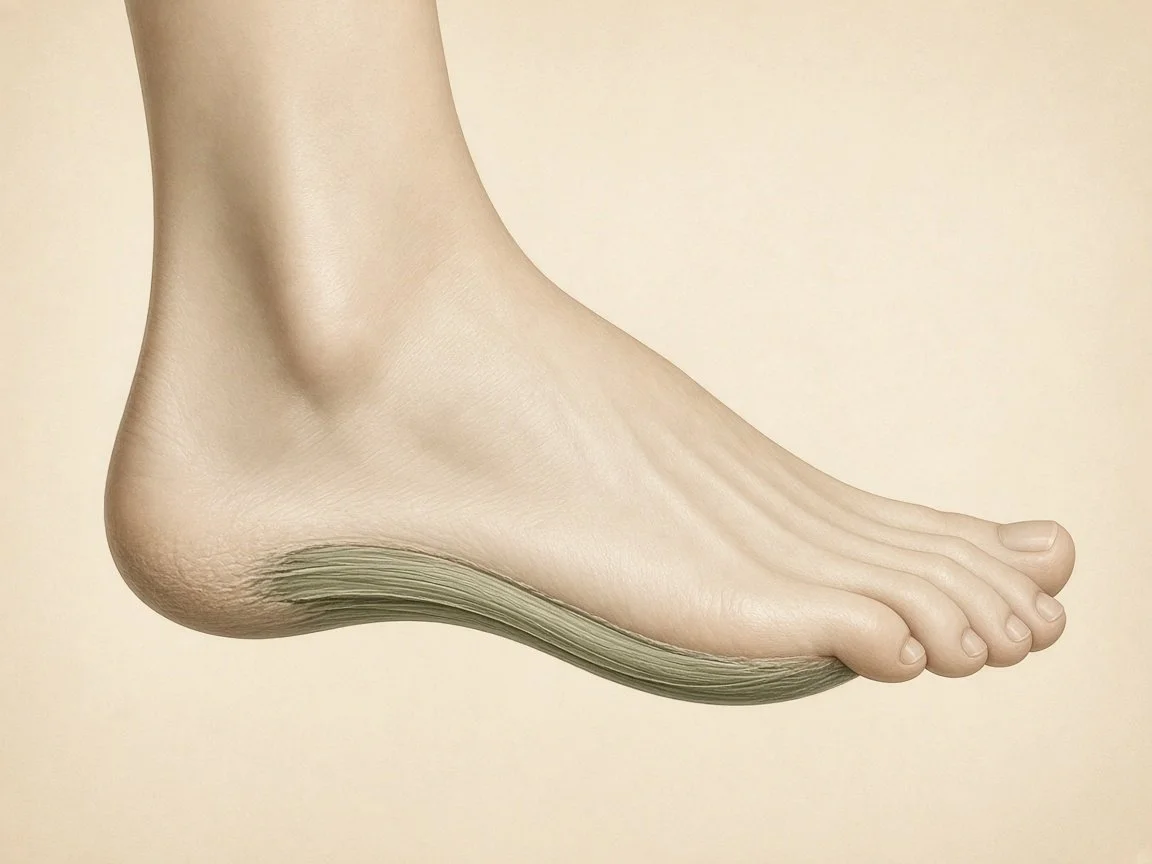
When that band takes more load than it's ready for, it gets irritated where it attaches at the heel. That might come from long hours standing on hard floors, a new walking or running habit, worn-out shoes, tight calves, or a few extra pounds. A sports chiropractor at Cleveland Clinic explains that the problem usually builds over time, and that it's often more common between ages 30 and 60 (2).
Why does it hurt most with the first steps?
While you sleep or sit, your foot rests in a relaxed, pointed position and the tissue shortens. The first steps suddenly stretch and load it again. That's why the pain is usually worst on initial weight-bearing, first thing in the morning or after you've been sitting (2), and why it often eases a bit once you get moving.
That pattern is a clue: gentle loading and lengthening before those first steps is where most of the at-home work starts.
In a 2-year follow-up, 94% of people who did a simple plantar-fascia stretch reported less pain.
7 natural ways to support your feet

1. Stretch the plantar fascia before you stand up
In a study of people who'd had heel pain for more than 10 months, a plantar-fascia-specific stretch was the key part of their program. At the 2-year follow-up, 94% reported a decrease in pain, 77% had no limits on recreational activity, and 92% were satisfied (3).
Try this today: Before you get out of bed, cross the sore foot over your other knee. Hold your toes and gently pull them back toward your shin until you feel a stretch along your arch. Hold for a slow count of 10, and repeat 10 times. Do it again before you stand up after long sitting.

2. Build strength with slow heel raises
Stretching helps, but strength matters too. In a randomized trial, people who did slow heel raises every other day had better foot function at 3 months than people who only stretched (4).
Try this today: Stand tall with a hand on the wall for balance. Rise up onto your toes slowly (about 3 seconds up), pause, then lower slowly (about 3 seconds down). Do 3 sets of 12, every other day. Once that feels easy, do one foot at a time, then try it on a step with a rolled towel under your toes, the way the study did.

3. Loosen tight calves
Your calf muscles and Achilles tendon pull on the same heel bone as your plantar fascia, so tight calves add tension to the bottom of your foot (2).

Try this today: Face a wall with the sore foot back, heel down and knee straight. Lean forward until you feel the stretch in your calf. Then repeat with the back knee slightly bent.
4. Strengthen your toes and arch
The small muscles in your feet help support the arch. Simple drills we like: toe spreads (spread the toes apart and hold), slow rises onto the balls of your feet, and a short-foot hold (keep the heel and the toes down and lift the arch into a small dome). Intrinsic foot-muscle training has been shown to improve foot posture and strength (10). These are the drills we teach in the office.
Try this today: Sit or stand on a mat. Spread your toes as wide as you can and hold for a few seconds, 10 times (use your hands to help at first). Then lift your heels and roll up onto the balls of your feet, 10 slow times. Finish with 5 slow short-foot holds.


5. Roll out the arch
Roll your arch over a foam roller, a firm ball or a frozen water bottle for about 5 minutes. You can also hold an ice pack wrapped in a towel on the area for about 15 minutes, up to three times a day, especially after a long day on your feet (2).

6. Give your toes room in a wide, flexible shoe
A stiff, narrow shoe can squeeze the toes and keep the foot from working the way it's built to. We like a wide toe box and a low, even (zero-drop) sole — the style often called a barefoot or minimalist shoe.
While your heel is sore, keep something on your feet on hard floors (2). That's different from going unshod on tile: we just prefer a wide, flexible shoe over a stiff slipper. If you're used to a thick, cushioned shoe, ease into these. These are not a treatment for plantar fasciitis — they're a more natural shape for everyday walking.
If running or long hours on hard floors keep flaring the heel, swap in cycling, swimming, or walking on softer ground for a few weeks, and add sit-down breaks (2).
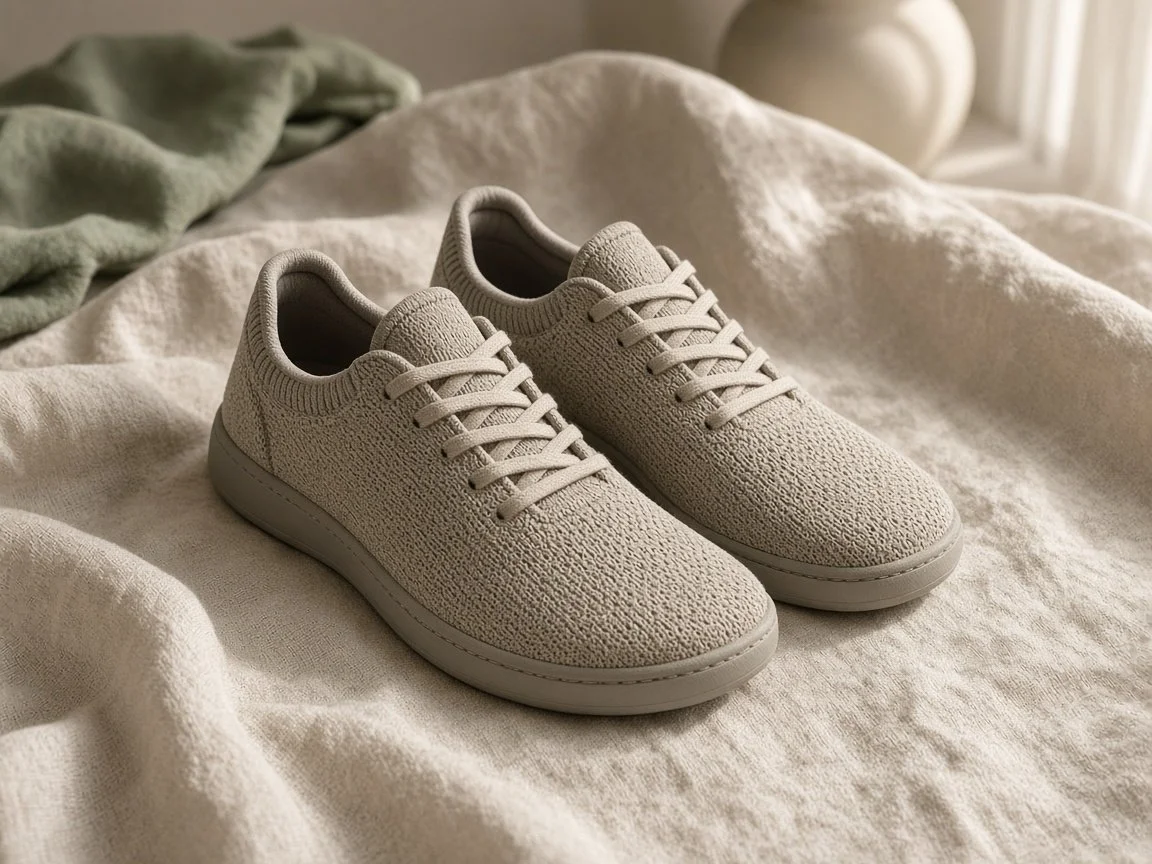
A wide, flexible shoe we like
As an Amazon Associate, we earn from qualifying purchases.
Two options we checked: WHITIN Wide Toe Box sneakers (women's and men's W81) and Merrell Trail Glove 7 barefoot shoes (women's and men's).
7. Feed the tissue (see the next section)
Your fascia is made of collagen, so what's on your plate matters too.
Nutrition for connective tissue
Connective tissue is living tissue that's constantly being rebuilt, and it needs raw materials.
- Vitamin C: your body needs it to make collagen; low vitamin C weakens connective tissue (6). Food sources include bell peppers, citrus, kiwi, strawberries and broccoli.
- Collagen-rich foods: In a small study, people who took 15 g of vitamin C-enriched gelatin an hour before a short bout of activity had double the marker of new collagen formation in their blood (7). That's one reason we love our Instant Pot bone broth: it's real food that's naturally rich in gelatin.
- A clean collagen supplement: When broth isn't happening, we like Ancient Nutrition Multi Collagen Protein, from Dr. Axe's brand, with vitamin C built in.

Ancient Nutrition Multi Collagen Protein
The collagen Dr. Holly & Sebastian recommend, from Dr. Axe's brand. One unflavored scoop stirs into coffee, a smoothie or soup.
Why we like it
- 10 g of collagen per scoop from 4 sources: beef, fish, chicken bone broth and eggshell membrane.
- Vitamin C built in, which your body needs to make its own collagen (6).
- Pasture-raised and grass-fed sources, with no flavor to hide.
How it works
Your plantar fascia, tendons and ligaments are built mostly from collagen. Collagen peptides are already broken into small pieces your body can absorb, and they supply the amino acids (like glycine and proline) it uses to rebuild that tissue.
Try this today: Take your collagen or a mug of broth with a vitamin C food, about an hour before your heel raises or a walk. That's the pattern the study used.
Shop it in our Fullscript storeWhere StemWave fits
Sometimes heel pain hangs on even when you're doing all the right things at home. That's when people come see us for StemWave.
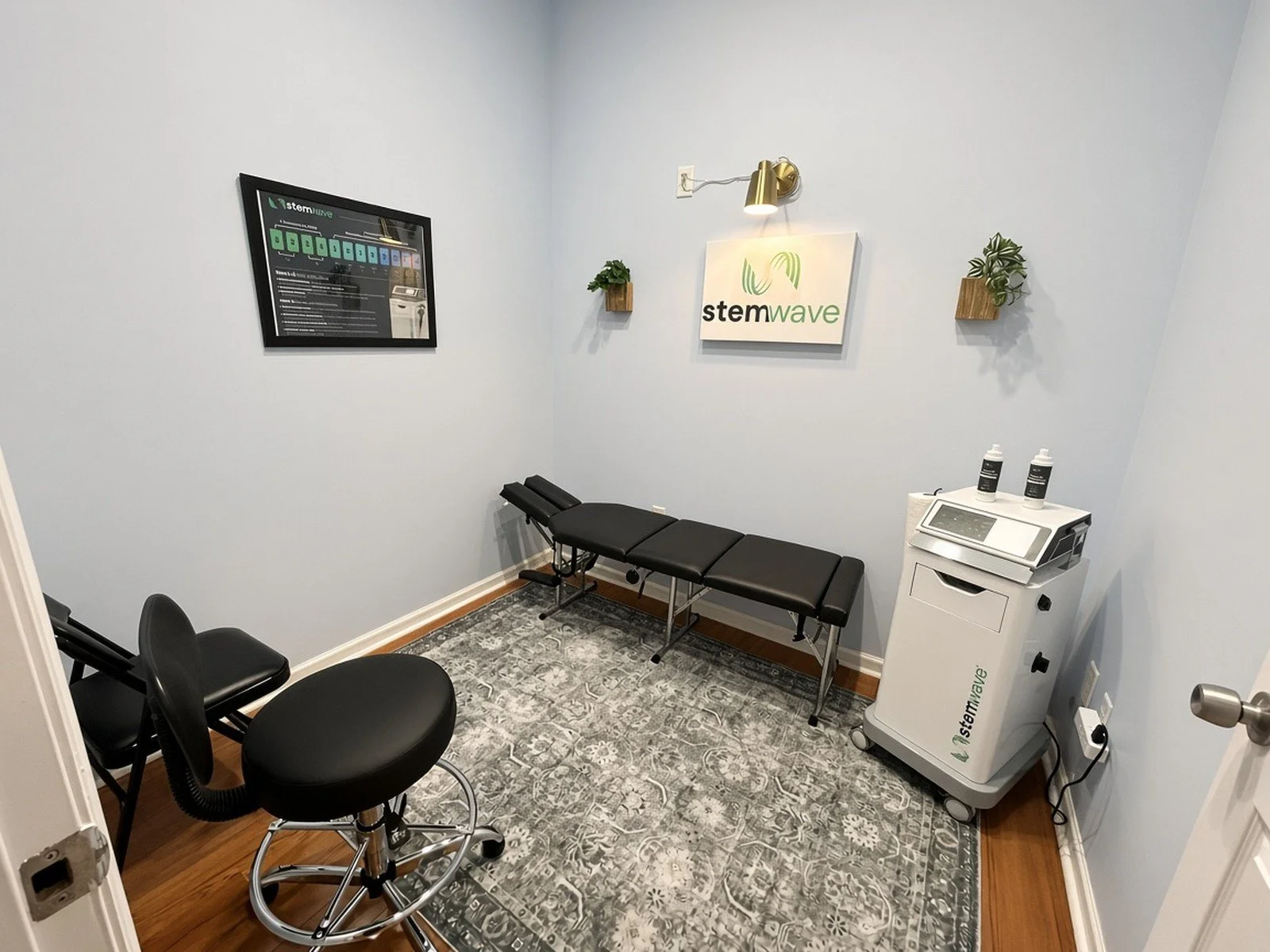
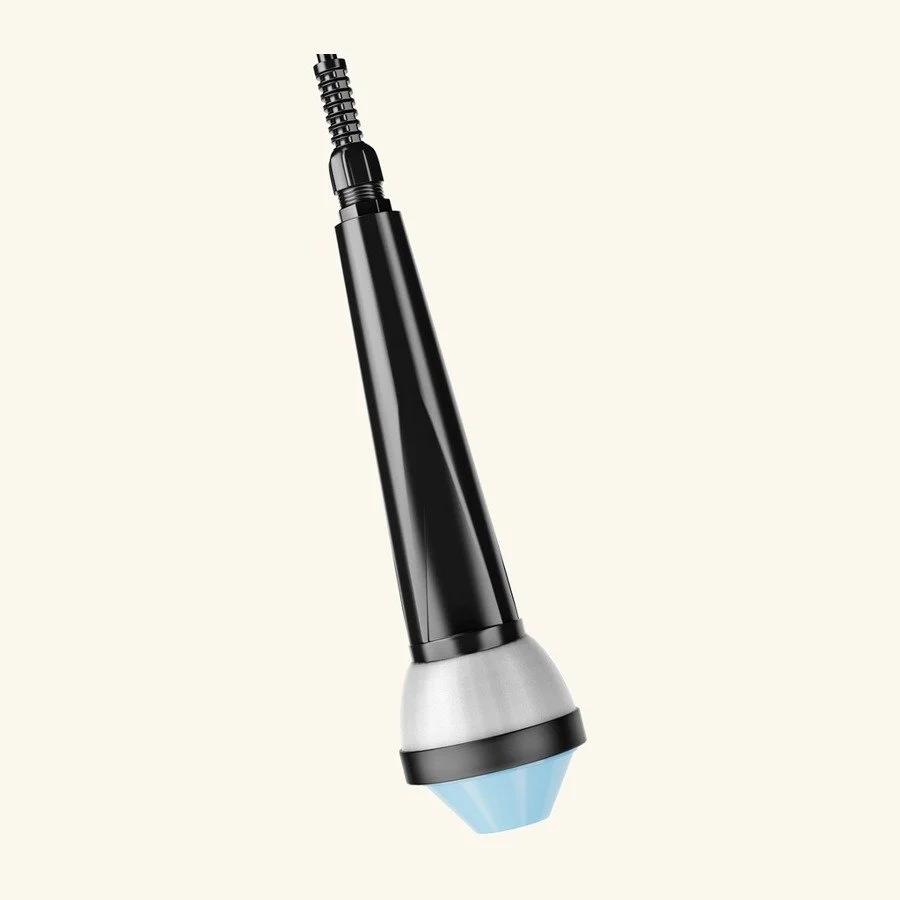
StemWave is a non-invasive handheld device that delivers focused pulses of energy to the area. Here's what a visit looks like in our office:
- We always start with a quick evaluation. StemWave isn't for everyone, so we screen first (pregnancy, pacemakers, blood thinners and a few other things).
- Gel goes on the skin and the applicator goes over the area. Most people describe it as a firm tapping. It can feel tender over sore spots.
- A session takes a few minutes, with no needles and no medication. If you're getting an adjustment the same day, StemWave comes last.
- Every body is different. Many plans run 6–12 sessions, spaced out on purpose, and we'll talk through what's realistic for you.
What research says about shockwave therapy for heel pain: StemWave is a focused shockwave device. In a 2019 network meta-analysis of 31 randomized trials with 2,450 people, shockwave therapy was one of the treatments ranked most likely to be effective for heel pain and function over the short, medium and long term (5). A 2022 systematic review found that, compared with therapeutic ultrasound, shockwave therapy did better for pain during activity, overall success rate, activity limits and patient satisfaction (9). These studies looked at shockwave therapy in general, not one specific brand.

Most people pair StemWave with the at-home habits above, and that combination is how we like to work.
Individual results vary.
Ready to get back on your feet?
Start with our $49 StemWave intro (regularly $250): a consultation, your first session and a plan made for you. Or call the office at (864) 558-0711.
When to call us right away
Call the office at (864) 558-0711 the same day if:
- your heel pain started with a fall, a pop or a direct injury;
- you can't put weight on your foot;
- your heel is red, hot or swollen, or you have a fever;
- you have numbness, tingling or burning in your foot.
For an emergency, call 911.
Questions people ask
Overnight the tissue on the bottom of your foot rests in a shortened position. The first steps suddenly stretch and load it again, which is why pain on initial weight-bearing is so typical (2). A gentle stretch before you stand up helps a lot of people.
The plantar-fascia-specific stretch: cross your foot over your knee and pull your toes back toward your shin. It was the key part of a program where 94% of people reported less pain at 2 years (3). Pair it with towel heel raises every other day (4).
While your heel is sore, keep something on your feet on hard floors (2). We prefer a wide, flexible shoe over going unshod on tile — and over a stiff slipper.
Most people describe a firm tapping. It can feel tender over sore spots, and a session takes a few minutes. We always do a quick evaluation first.
Every body is different. Many plans run 6–12 sessions, and we'll talk through what's realistic at your first visit.
The bottom line
- First-step heel pain usually comes from an irritated plantar fascia, the band that supports your arch.
- Start with the at-home basics: stretch before you stand, do towel heel raises every other day, loosen your calves, strengthen your toes and arch, roll the arch, and give your toes room in a wide, flexible shoe.
- Feed your connective tissue with vitamin C and collagen-rich foods like bone broth.
- If it's hanging on, StemWave is one more tool we use in our Mauldin office, and the shockwave research is encouraging.
Want more like this? We send real-food recipes, simple wellness tips and stories from our family and garden.
Sources & research
Every number in this article maps to a published source. The shockwave papers studied the therapy in general, not one specific brand.
- Riddle DL, Schappert SM. Volume of ambulatory care visits and patterns of care for patients diagnosed with plantar fasciitis: a national study of medical doctors. Foot Ankle Int. 2004;25(5):303-10. https://pubmed.ncbi.nlm.nih.gov/15134610/
- Cleveland Clinic. Chronic Heel Pain? 4 Home Remedies for Your Plantar Fasciitis (Thomas Torzok, DC). Nov 3, 2021. https://health.clevelandclinic.org/chronic-heel-pain-4-home-remedies-for-your-plantar-fasciitis
- DiGiovanni BF, et al. Plantar fascia-specific stretching exercise improves outcomes in patients with chronic plantar fasciitis: a prospective clinical trial with two-year follow-up. J Bone Joint Surg Am. 2006;88(8):1775-81. https://pubmed.ncbi.nlm.nih.gov/16882901/
- Rathleff MS, et al. High-load strength training improves outcome in patients with plantar fasciitis: a randomized controlled trial with 12-month follow-up. Scand J Med Sci Sports. 2015 Jun. https://pubmed.ncbi.nlm.nih.gov/25145882/
- Babatunde OO, et al. Comparative effectiveness of treatment options for plantar heel pain: a systematic review with network meta-analysis. Br J Sports Med. 2019;53(3):182-194. https://pubmed.ncbi.nlm.nih.gov/29954828/
- NIH Office of Dietary Supplements. Vitamin C: Fact Sheet for Health Professionals. https://ods.od.nih.gov/factsheets/VitaminC-HealthProfessional/
- Shaw G, et al. Vitamin C-enriched gelatin supplementation before intermittent activity augments collagen synthesis. Am J Clin Nutr. 2017;105(1):136-143. https://pubmed.ncbi.nlm.nih.gov/27852613/
- Fullscript catalog: CollaGEN, Ortho Molecular Products. https://fullscript.com/catalog/products/collagen
- Al-Siyabi Z, et al. Extracorporeal shockwave therapy versus ultrasound therapy for plantar fasciitis: a systematic review and meta-analysis. Cureus. 2022;14(1):e20871. https://pubmed.ncbi.nlm.nih.gov/35145778/
- Jaffri AH, Koldenhoven RM, Saliba SA, Hertel J. Evidence for Intrinsic Foot Muscle Training in Improving Foot Function: A Systematic Review and Meta-Analysis. J Athl Train. 2023. https://pubmed.ncbi.nlm.nih.gov/35724360/