You fall asleep fine. Then it's 2:47 a.m., you're wide awake, and your mind is already working through tomorrow's to-do list. You lie there, check the clock, do the math on how many hours are left, and feel more awake by the minute.
If that sounds familiar, you're in good company. In CDC survey data from 2022, 39% of adults ages 45 to 64 said they get less than the recommended 7 hours of sleep (1). We hear about it constantly in our Mauldin office, from busy moms, shift workers, and folks who used to sleep like a rock.
From a functional-medicine view, waking up at night is a signal, not a personality trait. Light, caffeine, alcohol, stress and minerals all play a part, and most of them are things you can change at home. Here's what we teach in our office.
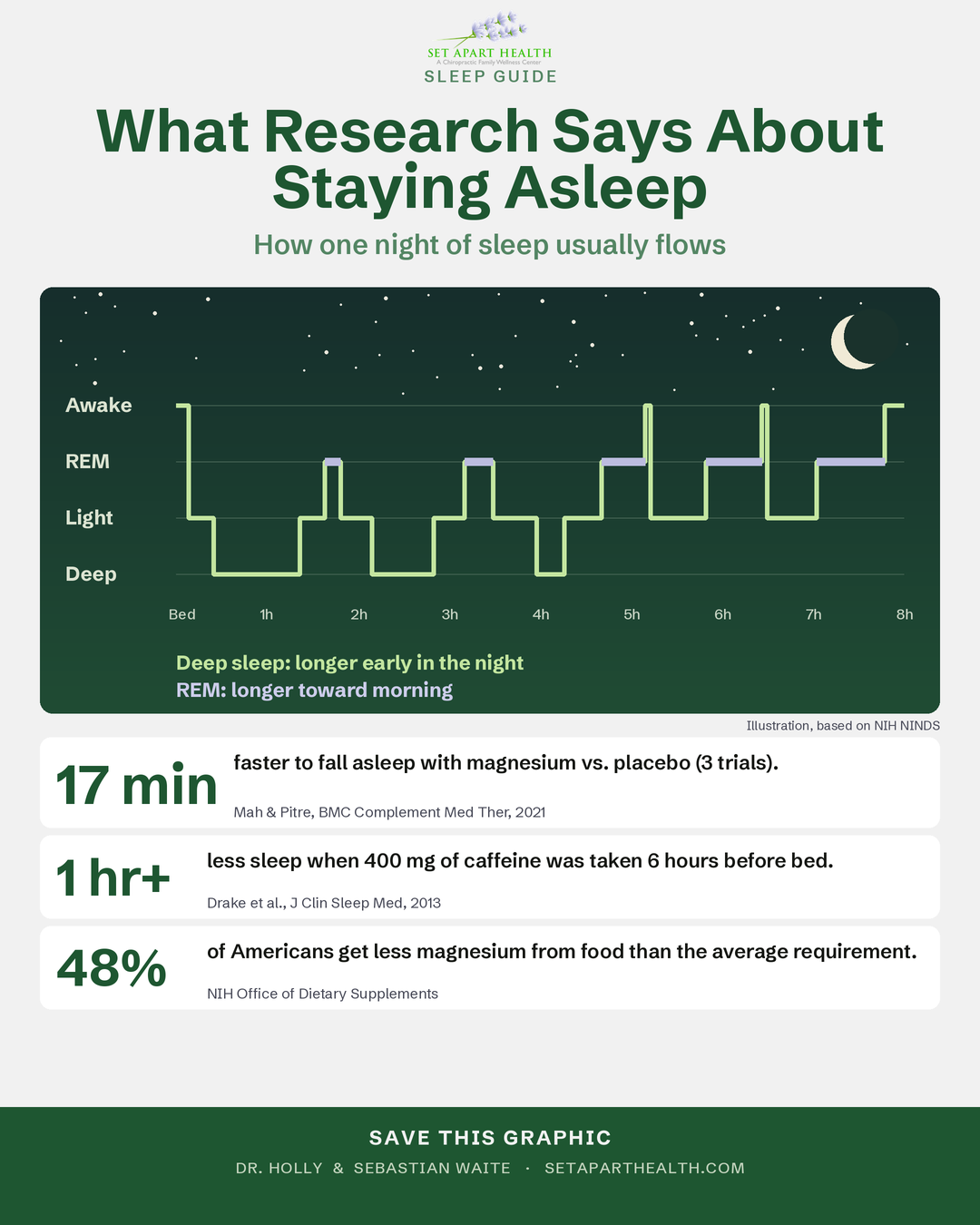
Faster to fall asleep with magnesium vs. placebo, in a review of 3 trials in older adults.
Mah & Pitre, 2021 (9)
Less sleep when 400 mg of caffeine was taken 6 hours before bed.
Drake et al., 2013 (5)
Of Americans get less magnesium from food than the average requirement.
NIH Office of Dietary Supplements (7)
Why do I wake up in the middle of the night?
Sleep isn't one long, flat stretch. Your brain cycles through light sleep, deep sleep and REM (dreaming) sleep several times a night. Deep sleep comes in longer stretches during the first half of the night, and REM periods get longer toward morning (2). The first REM period usually starts about 90 minutes after you fall asleep (2).
That second half of the night is where a lot of people get stuck. Alcohol is a classic example: it helps you drift off, then increases sleep disruption in the second half of the night (3). Light matters too. Specialized cells in your eyes tell your brain whether it's day or night, and light can make it harder to fall back asleep after you wake up (2).
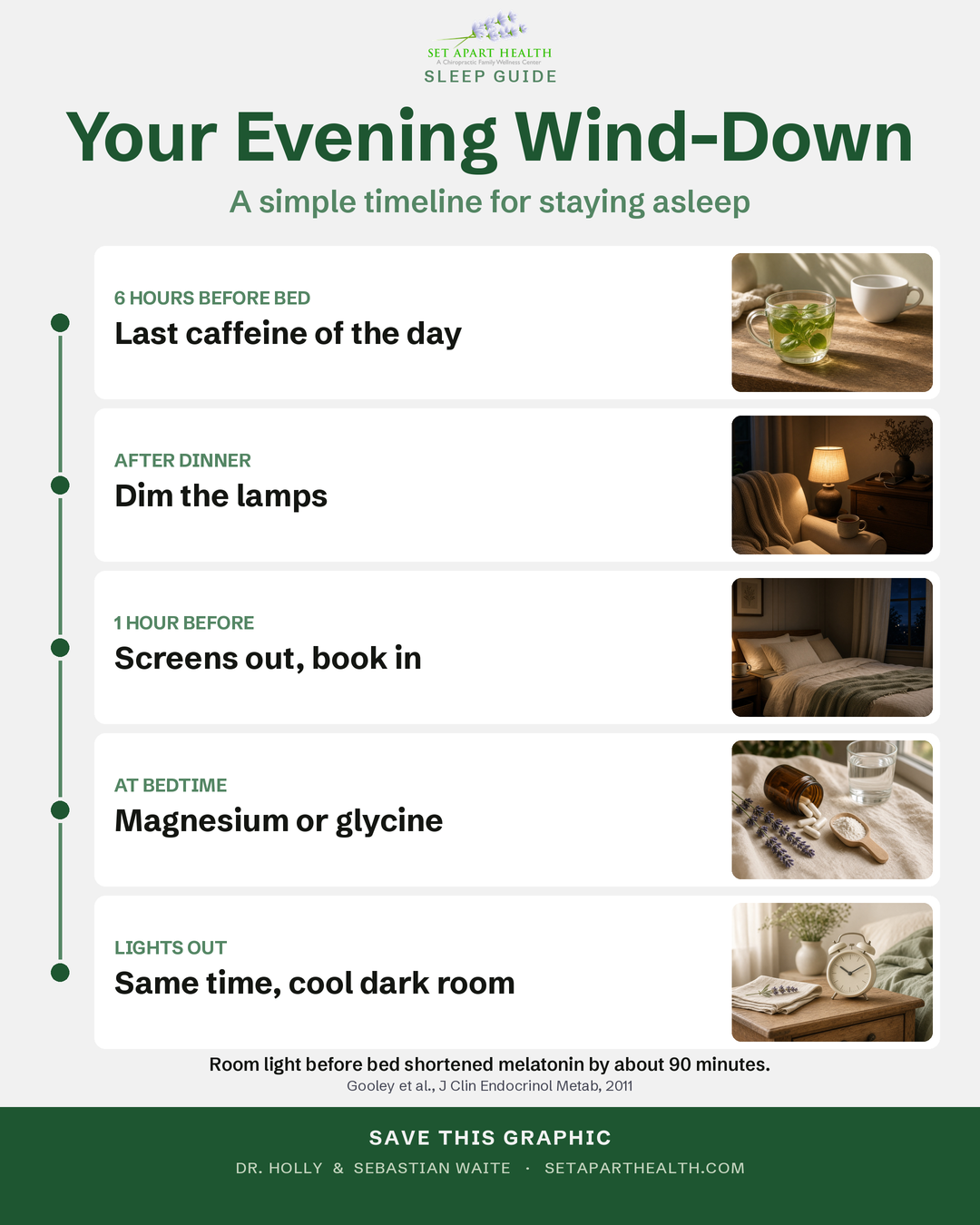
Room light before bed shortened the body's melatonin window by about 90 minutes.
7 natural ways to sleep through the night
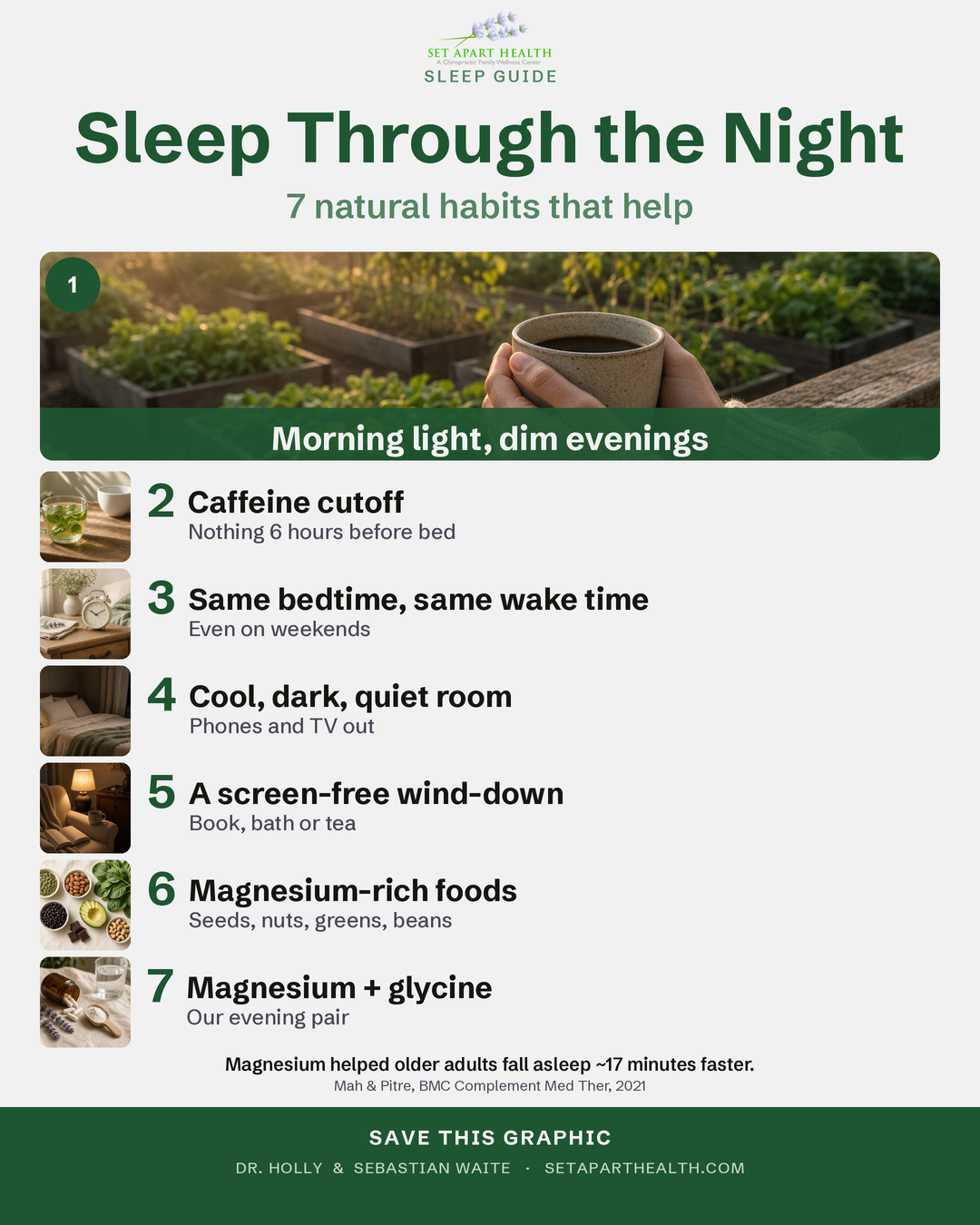
1. Get morning light and keep your evenings dim
Light is one of the strongest signals for your body clock (2). In one study, people exposed to ordinary room light in the evening had a later melatonin rise in 99% of cases and about 90 minutes less melatonin time than people in dim light (4).
Try this today: Step outside soon after you wake up, coffee in hand. After dinner, switch to a couple of low lamps and turn the overhead lights off.

2. Set a caffeine cutoff 6 hours before bed
In a sleep study, 400 mg of caffeine (about 2–3 cups of coffee) taken 6 hours before bedtime reduced measured sleep by more than an hour, and the people in the study mostly didn't notice it (5). If bedtime is 10 p.m., that means your last coffee is around 4 p.m. or earlier.

3. Keep the same bedtime and wake time
Going to bed and waking up at the same time each day is one of the first tips the National Institutes of Health gives (2). Your body clock likes rhythm, weekends included.
4. Make your bedroom cool, dark and quiet
Avoid bright lights and loud sounds, keep the room at a comfortable temperature, and keep the TV, phone and laptop out of the bedroom (2).
5. Go easy on the nightcap
A glass of wine can make you sleepy, but studies consistently show alcohol increases sleep disruption in the second half of the night (3). If you're waking at 2 or 3 a.m., try a few weeks without an evening drink and see what changes.
6. Move your body during the day
A meta-analysis of 66 studies found that regular exercise had small-to-moderate benefits for falling asleep and moderate benefits for overall sleep quality (6). A walk, garden work or a strength session all count. Just finish your workout a few hours before bedtime (2).
7. Build a screen-free wind-down
A warm bath, a real book or a cup of caffeine-free tea tells your body the day is done (2). We love a mug of tulsi tea from our garden. And if you wake up and can't fall back asleep, get up and do something calm in dim light until you feel sleepy, instead of lying there watching the clock (2).
 Holy Basil (Tulsi) Tea
View recipe →

Magnesium for sleep: what research says
Magnesium helps regulate muscle and nerve function (7), which is a big reason we look at it first when someone is restless at night. And many of us are running low: 48% of Americans get less magnesium from food and drinks than the average requirement, according to national survey data summarized by the NIH (7).
- The research: In a double-blind trial, 46 older adults with insomnia took 500 mg of magnesium or a placebo every day for 8 weeks. The magnesium group slept longer, slept more efficiently, fell asleep faster, and had higher melatonin and lower cortisol levels (8). A 2021 review of three trials found people fell asleep about 17 minutes faster with magnesium than with placebo (9).
- Food first: Pumpkin seeds, almonds, spinach, cashews and black beans are some of the richest food sources (7). A small handful of pumpkin seeds in the evening is an easy start.
- The form we like: For evenings, we like magnesium glycinate (also called bisglycinate), which is magnesium bound to the amino acid glycine. The NIH sets 350 mg a day as the upper limit for magnesium from supplements for adults, and too much can loosen stools (7).

Glycine for sleep: the calming amino acid
Glycine is a simple amino acid your body uses all over, including in collagen. In a crossover study of adults who'd been sleeping poorly, 3 g of glycine taken before bed improved how well they felt they slept and their sleep efficiency, shortened the time it took to fall asleep and reach deep sleep, and lessened daytime sleepiness the next day (10). Researchers think part of the effect comes from glycine gently lowering core body temperature, one of the body's natural signals for sleep (11).
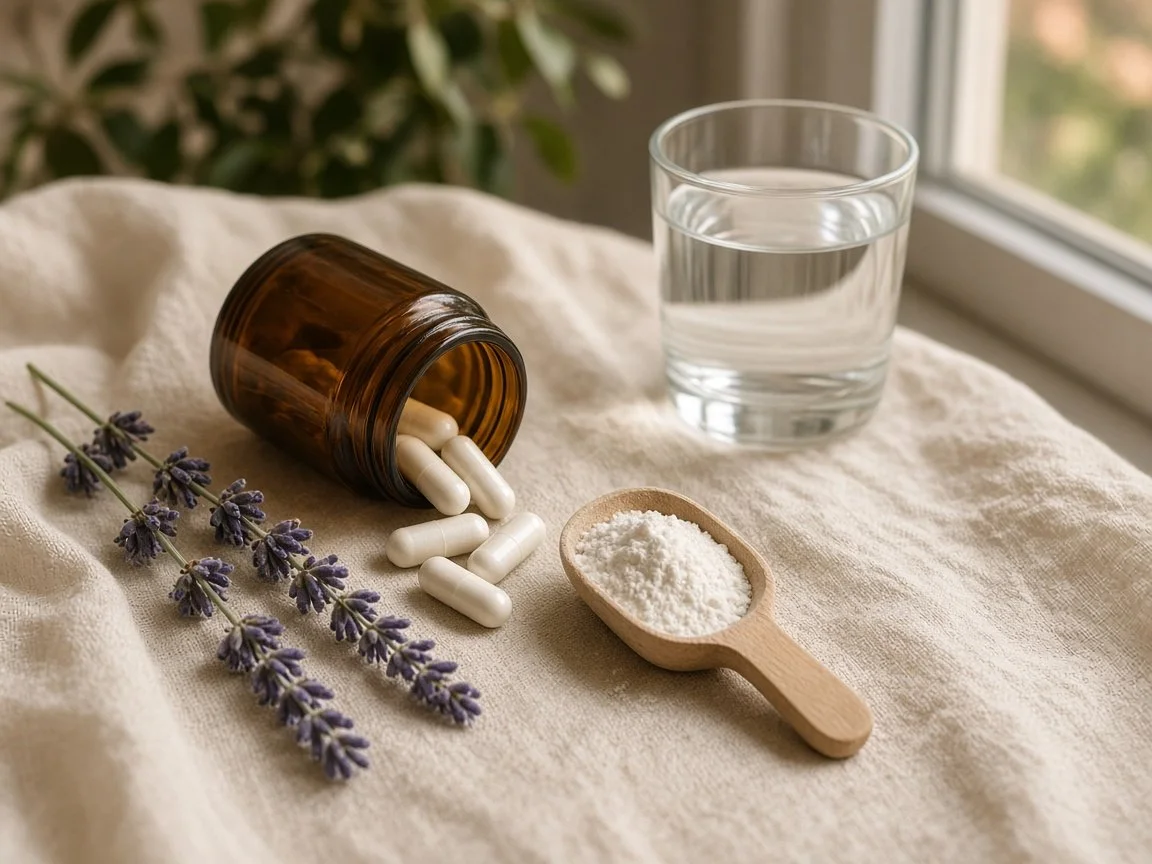
Thorne Magnesium Bisglycinate
A powder that mixes into water, with 200 mg of magnesium per scoop as magnesium bisglycinate, and NSF Certified for Sport (12). We like it in a small glass of water in the evening.
Try this today: Pair your evening magnesium with the wind-down routine above, about an hour before bed, so it becomes part of the same habit.
Shop Our Fullscript DispensaryNatural sleep support in Mauldin, SC: a personal plan
If you've tried the basics and you're still waking up every night, it's worth looking at the whole picture: stress, nutrition, the supplements you already take, and the neck and back tension that keeps you shifting around. That's what an office visit is for. We'll talk through your sleep, check in on the habits above, and build a plan with you, including gentle chiropractic adjustments when your neck or back is part of it. New to us? Here's what to expect at your first visit.

Ready to sleep through the night again?
Request a visit and we'll build a sleep plan around you, including the habits and supplements that fit. Or call the office at (864) 558-0711. We're at 785 E Butler Rd Ste D in Mauldin, just outside Greenville.
Can't sleep through the night? Questions people ask
Deep sleep is concentrated in the first half of the night, so the early-morning hours hold more REM and lighter sleep (2). Alcohol, late caffeine, evening light and a busy mind all make waking more likely then (3, 4, 5). Start with the 7 habits above.
For evenings we like magnesium glycinate (bisglycinate), which pairs magnesium with the calming amino acid glycine. Start with food too: a small handful of pumpkin seeds or almonds is an easy first step (7).
In the trial we cite, older adults took 500 mg a day for 8 weeks (8). The NIH upper limit for magnesium from supplements is 350 mg a day for adults (7). We'll help you find the right amount for you at a visit.
In a small study, 3 g of glycine before bed improved sleep quality, helped people fall asleep and reach deep sleep faster, and lessened next-day sleepiness (10).
Our office is at 785 E Butler Rd Ste D in Mauldin, SC, just outside Greenville. Request an appointment on the website, or call (864) 558-0711.
The bottom line
- Waking at night is a signal. Light, caffeine, alcohol, stress and minerals all play a part.
- Get morning light, dim your evenings, stop caffeine 6 hours before bed and keep a steady schedule.
- Eat magnesium-rich foods, and consider magnesium glycinate or glycine in the evening.
- If you're still waking every night, come see us in Mauldin and we'll build a plan with you.
Want more like this? We send real-food recipes, simple wellness tips and stories from our family and garden.
Sources & research
Every number in this article maps to a published source.
- Centers for Disease Control and Prevention. FastStats: Sleep in Adults (BRFSS 2022). https://www.cdc.gov/sleep/data-research/facts-stats/adults-sleep-facts-and-stats.html
- National Institute of Neurological Disorders and Stroke (NIH). Brain Basics: Understanding Sleep. https://www.ninds.nih.gov/health-information/public-education/brain-basics/brain-basics-understanding-sleep
- Ebrahim IO, Shapiro CM, Williams AJ, Fenwick PB. Alcohol and sleep I: effects on normal sleep. Alcohol Clin Exp Res. 2013;37(4):539-49. https://pubmed.ncbi.nlm.nih.gov/23347102/
- Gooley JJ, Chamberlain K, Smith KA, et al. Exposure to room light before bedtime suppresses melatonin onset and shortens melatonin duration in humans. J Clin Endocrinol Metab. 2011;96(3):E463-72. https://pubmed.ncbi.nlm.nih.gov/21193540/
- Drake C, Roehrs T, Shambroom J, Roth T. Caffeine effects on sleep taken 0, 3, or 6 hours before going to bed. J Clin Sleep Med. 2013;9(11):1195-200. https://pubmed.ncbi.nlm.nih.gov/24235903/
- Kredlow MA, Capozzoli MC, Hearon BA, Calkins AW, Otto MW. The effects of physical activity on sleep: a meta-analytic review. J Behav Med. 2015;38(3):427-49. https://pubmed.ncbi.nlm.nih.gov/25596964/
- NIH Office of Dietary Supplements. Magnesium: Fact Sheet for Health Professionals. https://ods.od.nih.gov/factsheets/Magnesium-HealthProfessional/
- Abbasi B, Kimiagar M, Sadeghniiat K, et al. The effect of magnesium supplementation on primary insomnia in elderly: a double-blind placebo-controlled clinical trial. J Res Med Sci. 2012;17(12):1161-9. https://pubmed.ncbi.nlm.nih.gov/23853635/
- Mah J, Pitre T. Oral magnesium supplementation for insomnia in older adults: a systematic review & meta-analysis. BMC Complement Med Ther. 2021;21(1):125. https://pubmed.ncbi.nlm.nih.gov/33865376/
- Yamadera W, Inagawa K, Chiba S, et al. Glycine ingestion improves subjective sleep quality in human volunteers, correlating with polysomnographic changes. Sleep Biol Rhythms. 2007;5(2):126-131. https://onlinelibrary.wiley.com/doi/full/10.1111/j.1479-8425.2007.00262.x
- Bannai M, Kawai N. New therapeutic strategy for amino acid medicine: glycine improves the quality of sleep. J Pharmacol Sci. 2012;118(2):145-8. https://pubmed.ncbi.nlm.nih.gov/22293292/
- Fullscript catalog: Magnesium Bisglycinate, Thorne. https://fullscript.com/catalog/products/magnesium-bisglycinate