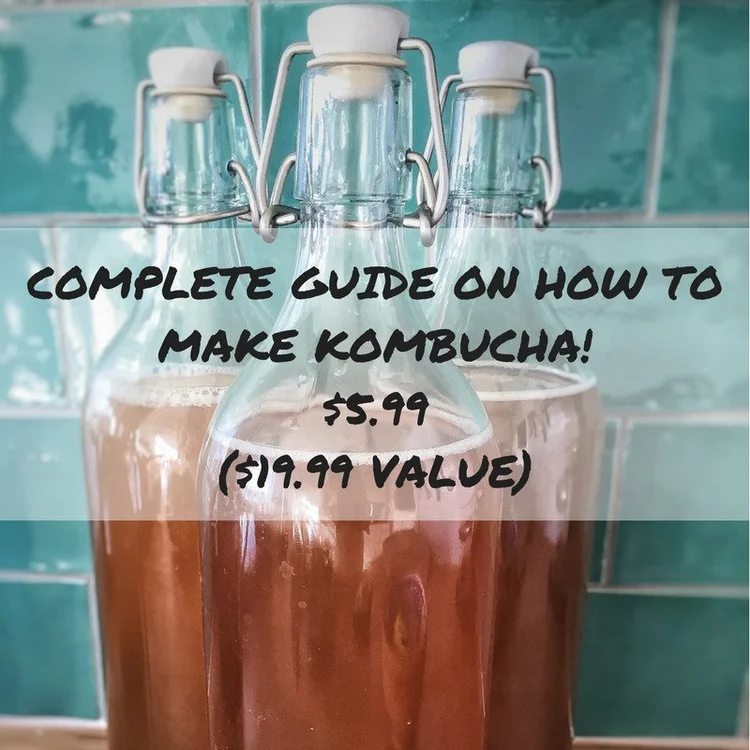
The Complete Kombucha Guide, $5.99. 14 illustrated pages with exact amounts, the second ferment, our Cherry Vanilla recipe and 80+ flavor ideas.
Get the GuideOur family makes sauerkraut, fermented pickles, coconut kefir and kombucha. If you only try one, start with kombucha. It takes about 10 minutes of hands-on time, the culture does the rest, and you end up with a fizzy drink you'll actually reach for instead of soda.
Why We Started with Fermented Foods
Before I started my health journey, I dealt with a lot of digestive issues. The first and biggest piece of the puzzle was getting under regular chiropractic care. After that, I realized that if I wanted to live a long, healthy life and be the best husband, dad and business owner I could be, I needed to take better care of myself.
The next piece was food: good, whole foods, including fermented foods. They contain live probiotics and enzymes, and they've become a daily part of how our family eats.
What Is Kombucha?
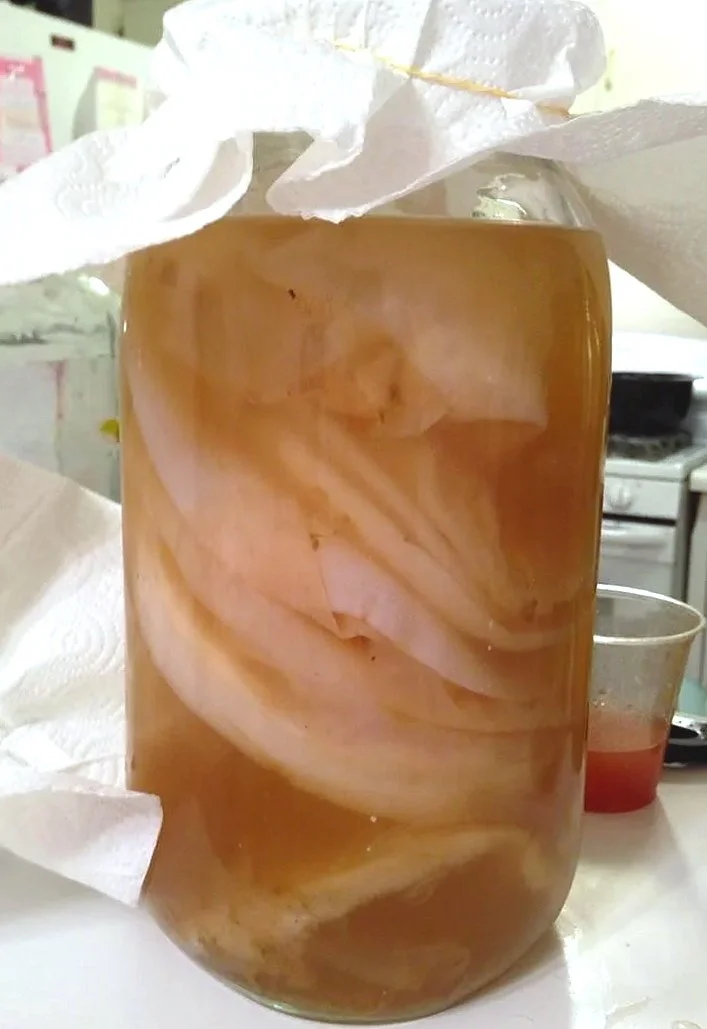
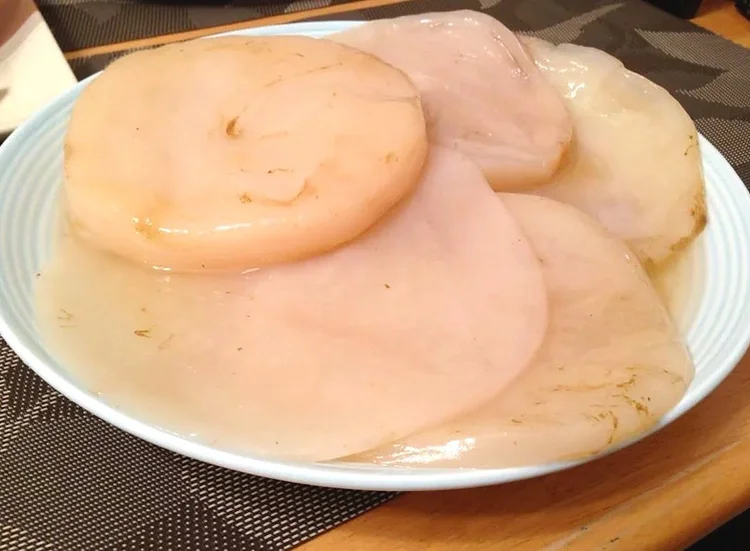
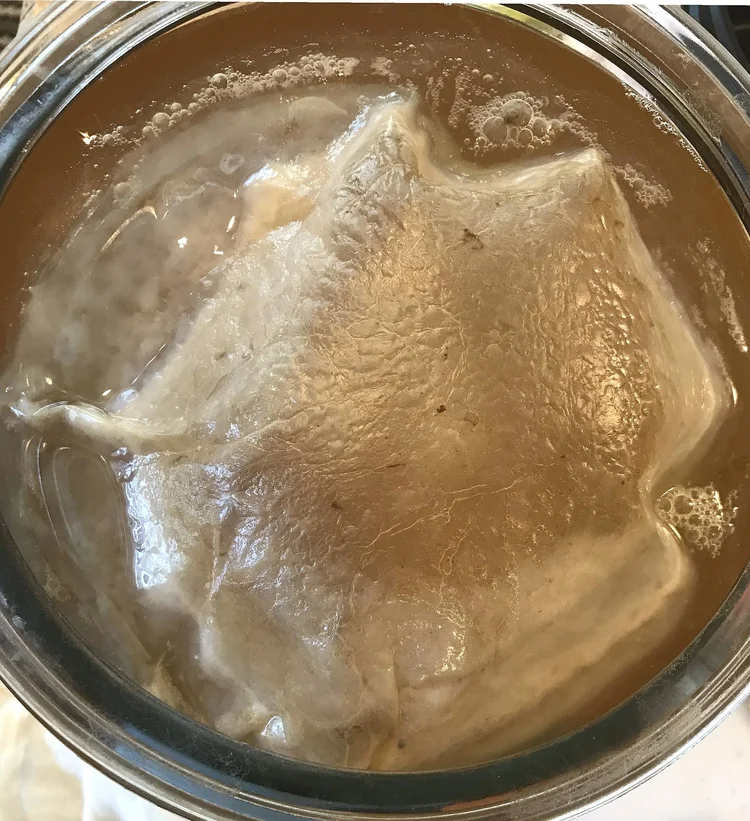
Kombucha is a fermented tea, usually made with black tea and cane sugar. A living culture called a SCOBY (Symbiotic Culture of Bacteria and Yeast) feeds on the sugar as the tea ferments. The result is tart, slightly sweet and naturally fizzy, rich in organic acids and live cultures.
No one knows exactly where it started, but it's thought to have come from China, spread through Russia and Europe, and caught on in the United States in the 1990s.
8 Reasons We Love Kombucha
Kombucha has been studied for decades. Much of the research so far has been done in labs and in animals, so we share it as encouraging, not as proof of what it will do for you.
Tea antioxidants
Kombucha brewed from tea contains tea polyphenols, natural antioxidants that change as the tea ferments. [7]
Stomach lining support
In a study in mice, kombucha helped protect the stomach lining from ulcer damage. [2]
Liver support in animal studies
Animal studies found kombucha helped protect the liver from damage caused by acetaminophen overdoses. [3][4]
Natural antibacterial activity
Lab studies show fermented teas have antibacterial activity against several common bacteria. [5][6]
Organic acids
Kombucha contains organic acids, including glucuronic acid, that form during fermentation. [7]
Kidney support in animal studies
In a study in rats, kombucha helped protect the kidneys from oxidative stress. [9]
Blood sugar in animal studies
Animal studies report kombucha lowered blood sugar levels in diabetic mice and rats. [11][12]
A healthier fizzy drink
When you brew it yourself, you control how much sugar is left in your bottle.
Why Homemade Is Better
Many store-bought brands add extra sugar during the second ferment to make their kombucha fizzier, and there's no guarantee that sugar gets fermented out. When you brew your own, you decide how long it ferments, so you know exactly what's in your bottle.
It's a lot cheaper, too. A store bottle can cost up to $5. A whole homemade gallon costs less than $1.50.
Set Apart Kitchen · Drinks
How to Brew Kombucha at Home: The Quick Overview
Brewing kombucha takes about 10 minutes of hands-on time. The rest is patience. Here's the big picture. Exact tea and sugar amounts are in The Complete Kombucha Guide.
Ingredients
A 1-gallon batch. You won't need every bottle size; they're options so you can choose what works for you.
- A SCOBY (the living culture) plus about 2 cups of starter liquid from a previous batch (the one we use)
- A 1-gallon glass jar (the one we use) (or a gallon glass jar with a spigot; a stainless steel spigot is the best choice)
- Organic black, green or oolong tea — black, green, or oolong
- Organic cane sugar (the culture eats most of it during brewing) (the one we use)
- Filtered water
- A breathable cover: fine cheesecloth or a tight-weave cloth and a rubber band (the one we use)
- Flip-top glass bottles for bottling and the second ferment — 32 oz, 16 oz, or 12 oz
Tap an ingredient to check it off as you go.
Instructions
- Brew sweet tea. Steep your tea in hot filtered water, then stir in the sugar until it dissolves.
- Cool it completely. Top off the jar with cool filtered water and let the tea come to room temperature. Hot tea can harm the SCOBY.
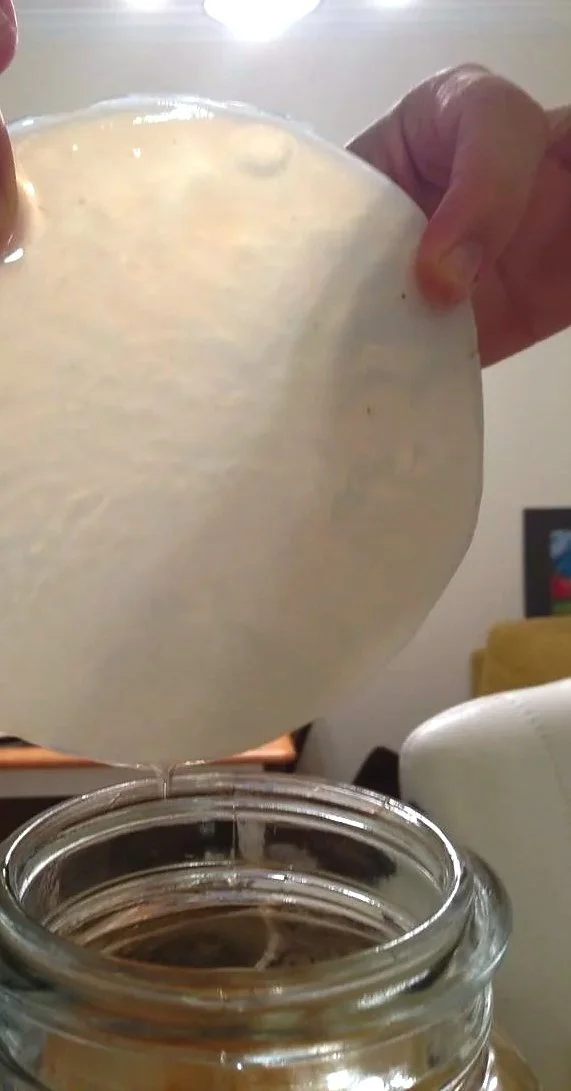
- Add the culture. Pour in your starter liquid and gently add the SCOBY.
- Cover and wait. Cover the jar with cloth, secure it, and set it somewhere warm and out of direct sunlight.
- Taste test. After about a week, taste it with a clean straw. When it's tart but still a little sweet, it's ready.
- Save your starter. Keep the SCOBY and about 2 cups of the liquid for your next batch.
- Bottle and flavor. Pour the rest into flip-top bottles, add fruit or spices if you like, and seal for the second ferment.
- Chill and enjoy. Once it's as fizzy as you like, move the bottles to the fridge.
Tip. I usually bottle about 112 oz per gallon and save about 16 oz of starter liquid for the next batch. One gallon fills about three 32 oz bottles and one 16 oz bottle, seven 16 oz bottles, or 9–10 12 oz bottles. Flavoring takes up some room in each bottle, so plan on a few extra.
Our Favorite Flavor Ideas
The second ferment is where the fun is. A few of our favorites:
- Apple Cinnamon Kombucha, our cozy fall go-to (just 3 ingredients)
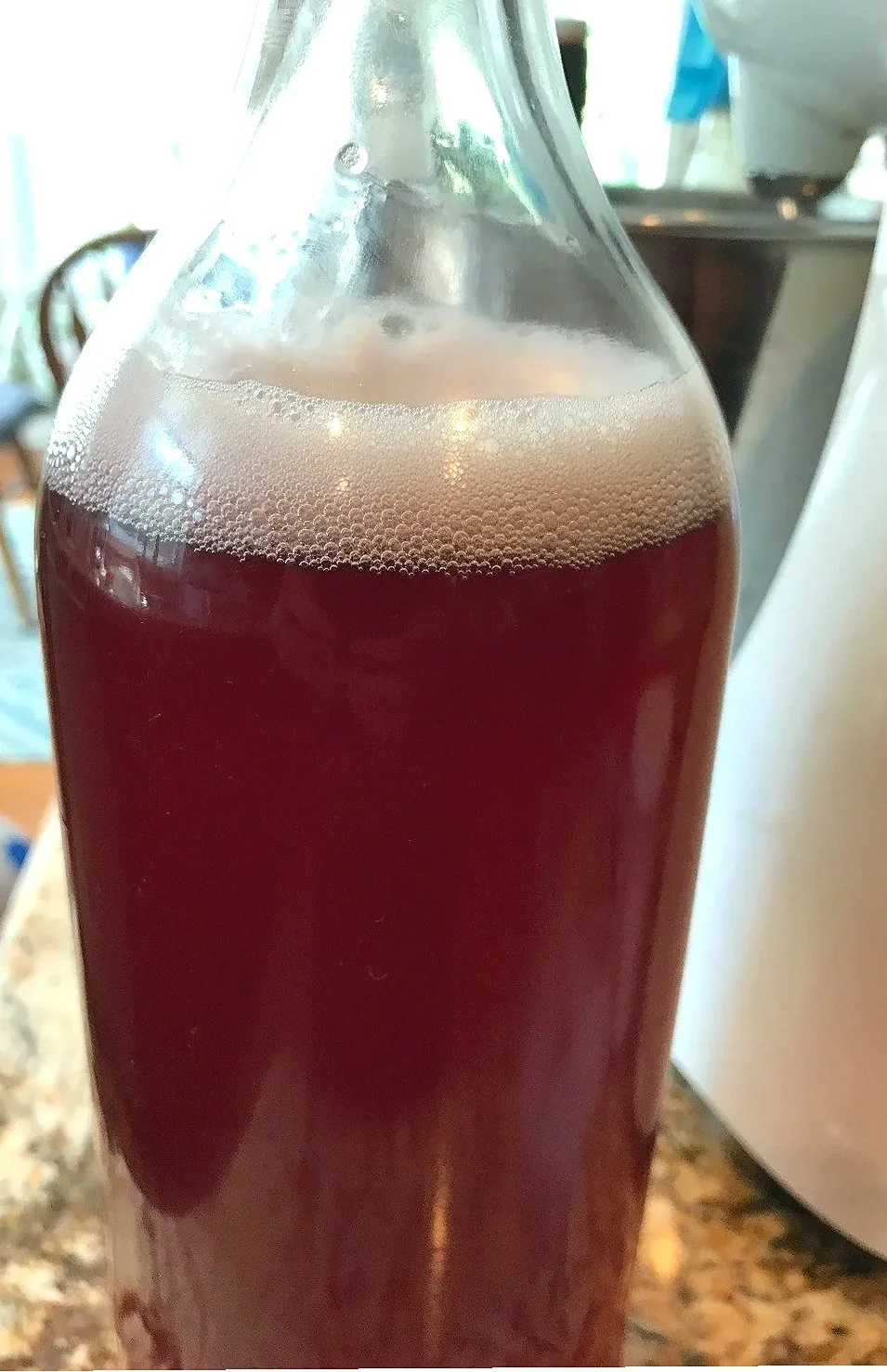
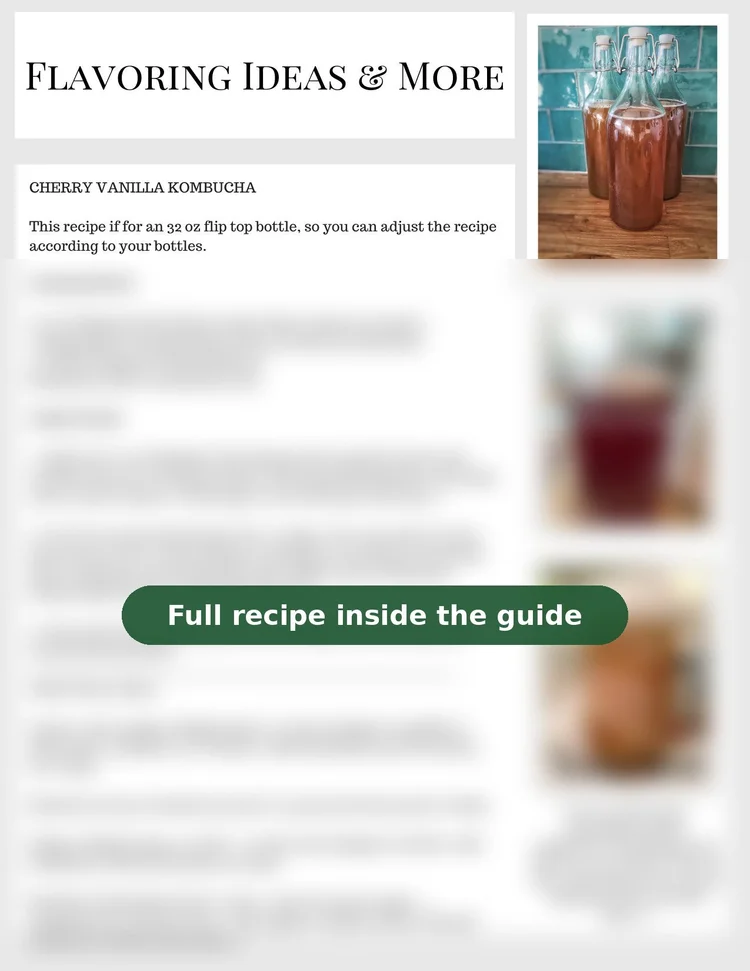
- Cherry Vanilla (the full recipe is in the guide)
- Fresh ginger and lemon
- Berries with a sprig of mint
Step-by-Step Photos
All from our own batches at home.
Kombucha Brewing Tips
- Brew and store in glass. If your jar has a spigot, stainless steel is the best choice.
- Start with clean hands and clean equipment every time.
- Fuzzy, dry spots of mold (often white, green, blue or black) mean the batch should be thrown out, SCOBY and all.
- Open bottles carefully after the second ferment. They can be very fizzy.
- Homemade kombucha keeps a little caffeine from the tea, and a shorter ferment gives you a sweeter, milder glass.
Kombucha FAQ
How much kombucha should I drink?
Start slow. We recommend beginning with about 4 oz a day and working up to 8 oz.
How long does it take?
About 10 minutes of hands-on time. Start taste-testing the first ferment after about a week, then give the bottles a few days at room temperature for the second ferment before you chill them.
Where do I get a SCOBY?
From a friend who brews, online, or you can grow your own. The guide shows you how, plus how to keep a SCOBY hotel so you always have a spare.
What's in The Complete Kombucha Guide?
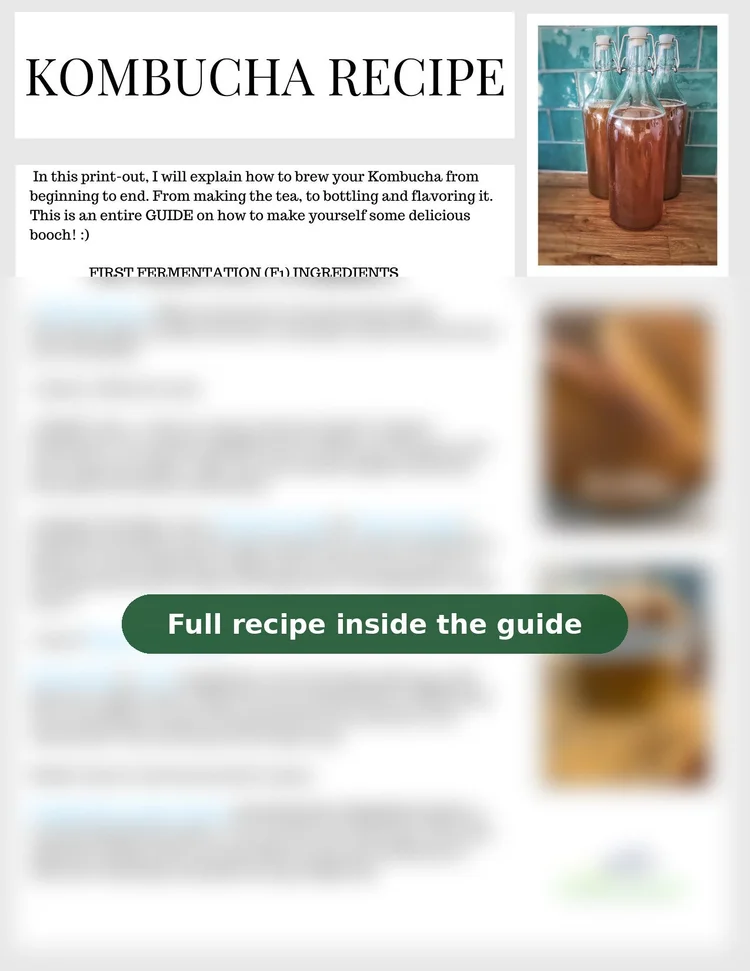
Every step for your first gallon with exact amounts, the second ferment, our Cherry Vanilla recipe, 80+ flavor ideas, workshop recipes and answers to common questions. It's $5.99 as an instant PDF download. Get the guide.
A Peek Inside the Guide
Illustrated pages you can print and keep in the kitchen. The full pages are in the guide.

From Dr. Holly & Sebastian Waite
Ready to Brew Your First Gallon?
Every step, exact amounts and 80+ flavor ideas in one illustrated guide. $5.99, instant PDF download.
Get The Complete Kombucha Guide